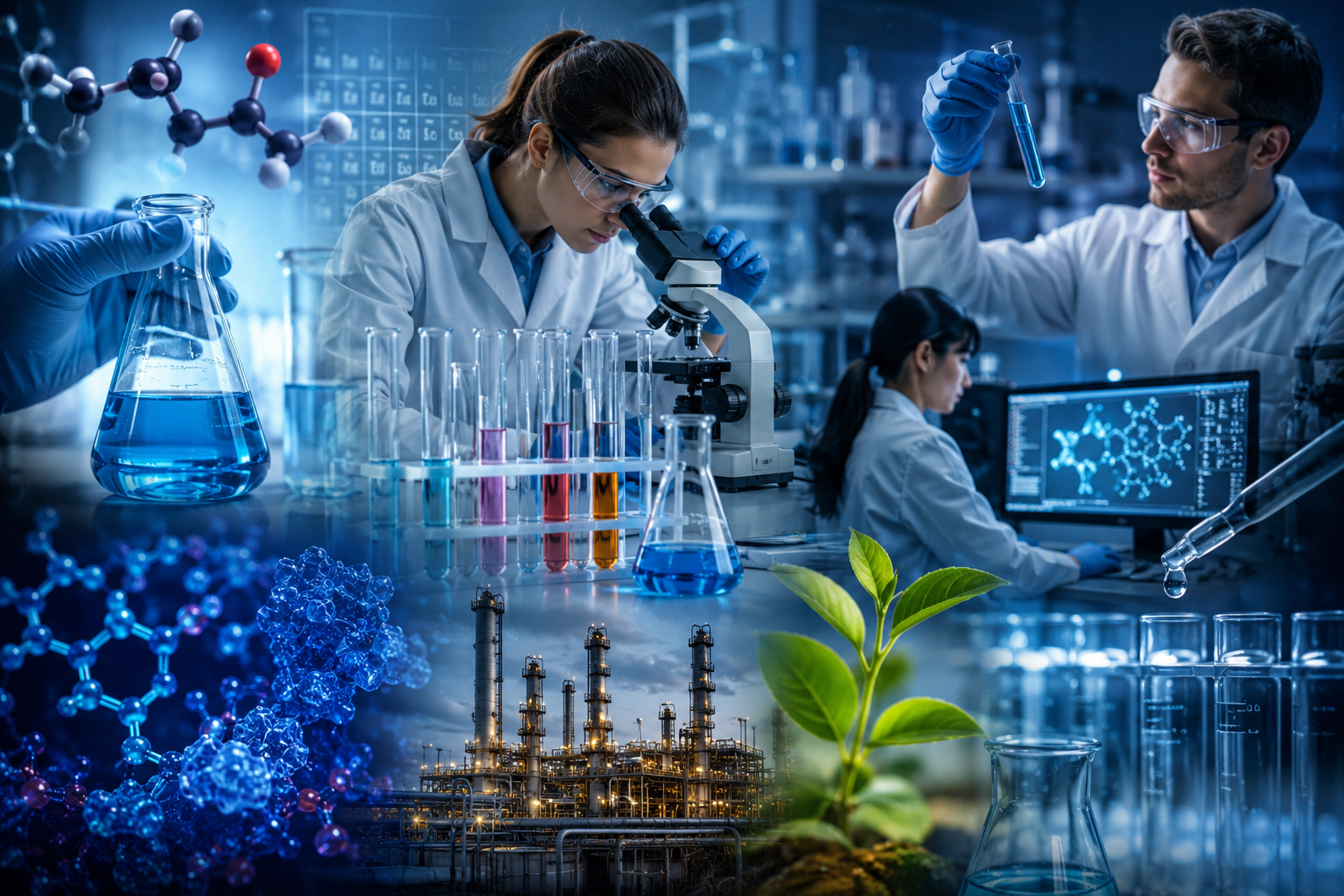

Chemistry is often called the “central science” because it connects physics, biology, environmental science, medicine, and engineering. Chemists study the composition, properties, and behavior of matter, using their knowledge to solve problems ranging from developing life-saving medicines to creating sustainable materials and improving industrial processes.
Although many people imagine chemists working in laboratories surrounded by glassware and colorful chemicals, the field is remarkably diverse. Chemists specialize in different branches, each focusing on unique scientific challenges and applications. Understanding these specialties can help students, professionals, and science enthusiasts appreciate the wide range of careers available in chemistry.
Analytical Chemists
Analytical chemists identify and measure the chemical components of substances. They use sophisticated instruments such as spectrometers, chromatographs, and microscopes to determine the composition and purity of materials.
Their work is essential in industries including pharmaceuticals, environmental monitoring, food safety, forensic science, and manufacturing. Analytical chemists help ensure that products meet quality standards and comply with safety regulations.
Organic Chemists
Organic chemists study compounds that contain carbon, including many substances found in living organisms. They design, synthesize, and analyze molecules used in medicines, plastics, fuels, cosmetics, and agricultural products.
This specialization plays a major role in pharmaceutical research, where scientists develop new drugs by creating and testing organic compounds with potential therapeutic effects.
Inorganic Chemists
Inorganic chemists focus on compounds that generally do not contain carbon-hydrogen bonds, such as metals, minerals, salts, and ceramics. Their research supports industries including electronics, energy storage, catalysts, and advanced materials.
They contribute to innovations in batteries, semiconductors, solar cells, and industrial manufacturing.
Physical Chemists
Physical chemists combine chemistry with physics to understand how chemical reactions occur at the molecular and atomic levels. They study energy, reaction rates, molecular structures, and the physical properties of matter.
Their research often involves mathematical modeling and advanced instrumentation, helping scientists develop new materials, improve manufacturing processes, and better understand chemical behavior.
Biochemists
Biochemists investigate the chemical processes that occur within living organisms. They study proteins, enzymes, DNA, RNA, carbohydrates, and other biomolecules that are essential for life.
Their work contributes to medicine, biotechnology, genetics, nutrition, and disease research. Biochemists play a critical role in developing vaccines, diagnostic tests, and new medical treatments.
Environmental Chemists
Environmental chemists examine how chemicals interact with air, water, soil, and ecosystems. They monitor pollution, investigate contaminants, and develop methods to reduce environmental damage.
Their work supports conservation efforts, climate research, water quality management, waste treatment, and environmental policy.
Medicinal Chemists
Medicinal chemists specialize in designing and improving pharmaceutical compounds. By combining principles of organic chemistry, biology, and pharmacology, they create molecules that can become safe and effective medicines.
They work closely with biologists, pharmacologists, and clinical researchers throughout the drug development process.
Industrial Chemists
Industrial chemists apply chemical knowledge to large-scale manufacturing. They optimize production methods, improve efficiency, reduce costs, and ensure product quality across industries such as chemicals, plastics, paints, food, and consumer goods.
Their work helps transform laboratory discoveries into commercially viable products.
Polymer Chemists
Polymer chemists study large molecules made from repeating units called polymers. These materials include plastics, synthetic fibers, rubber, adhesives, and many advanced composites.
They develop stronger, lighter, and more sustainable materials for applications in automotive engineering, aerospace, healthcare, electronics, and packaging.
Forensic Chemists
Forensic chemists apply chemical analysis to criminal investigations. They examine evidence such as drugs, explosives, fibers, paints, blood samples, and unknown substances to help investigators solve crimes.
Their findings often provide crucial scientific evidence in legal proceedings.
Nuclear Chemists
Nuclear chemists study radioactive materials and nuclear reactions. Their work supports nuclear energy production, medical imaging, radiation therapy, and scientific research.
They also contribute to environmental monitoring and the safe handling and disposal of radioactive materials.
Materials Chemists
Materials chemists develop and study substances with specific physical and chemical properties. Their research includes nanomaterials, smart materials, superconductors, biomaterials, and electronic materials.
These innovations drive advances in renewable energy, medical devices, telecommunications, and consumer electronics.
Food Chemists
Food chemists analyze the composition, flavor, texture, nutritional value, and safety of food products. They work to improve food quality, extend shelf life, develop new products, and ensure compliance with food safety regulations.
Their expertise supports both food manufacturers and public health organizations.
The Importance of Specialization
Modern scientific challenges often require collaboration among multiple types of chemists. For example, developing a new medicine may involve organic chemists creating molecules, analytical chemists testing purity, biochemists studying biological effects, medicinal chemists optimizing drug performance, and industrial chemists scaling up production.
This interdisciplinary approach allows chemistry to address increasingly complex problems in healthcare, technology, sustainability, and manufacturing.
Conclusion
Chemistry offers an extraordinary variety of career paths, each contributing to scientific discovery and technological innovation. Whether studying molecules in living cells, analyzing environmental pollutants, designing advanced materials, or developing life-saving medicines, chemists play a vital role in improving our understanding of the world and enhancing everyday life.
As science and technology continue to evolve, the demand for skilled chemists across diverse specialties will remain essential, making chemistry one of the most dynamic and impactful scientific disciplines.
Member discussion