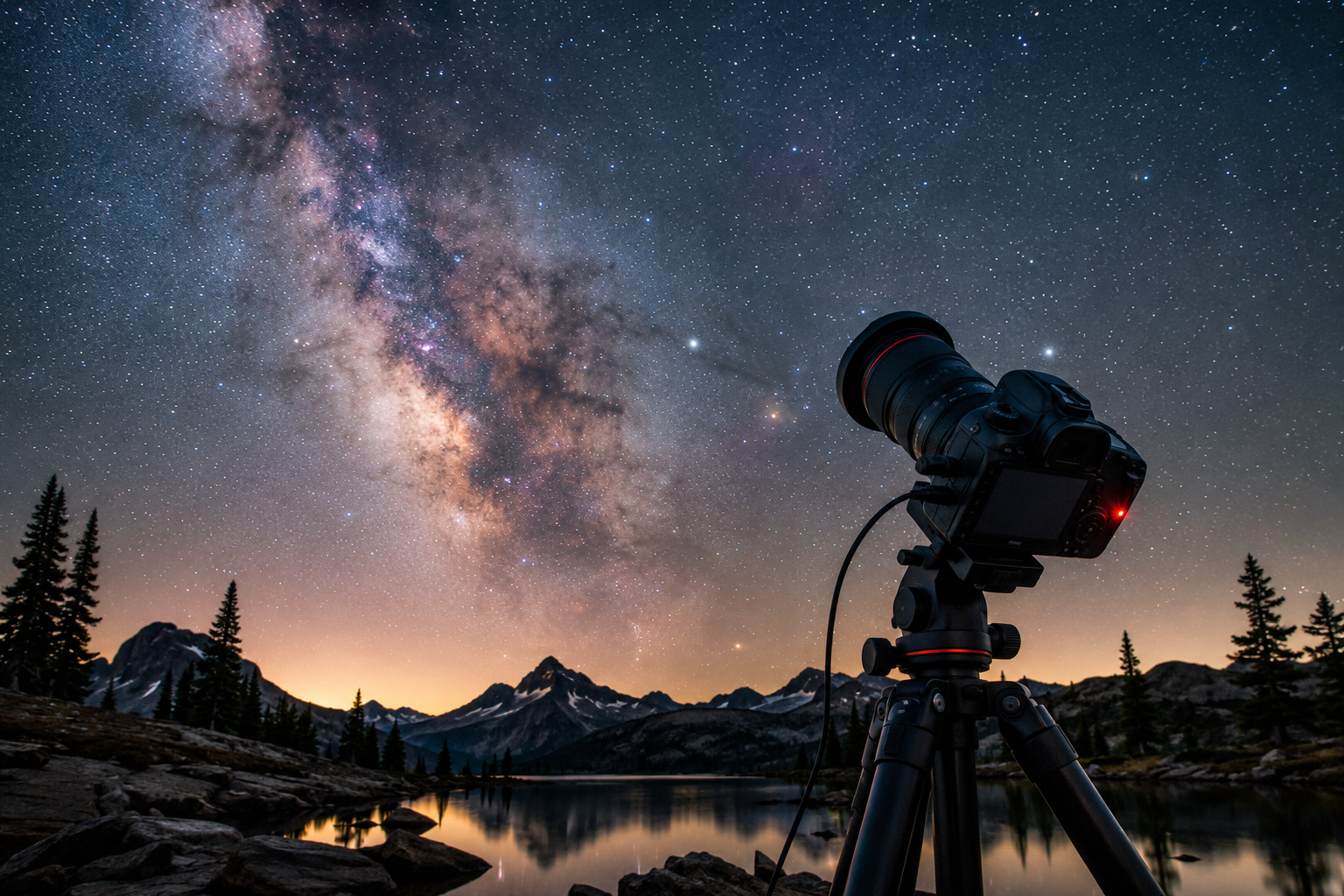

Astrophotography is one of the most rewarding forms of photography because it allows us to capture objects and events that are invisible or fleeting to the naked eye. From sweeping views of the Milky Way stretching across a dark sky to detailed images of distant galaxies and colorful nebulae, astrophotography combines artistic vision with scientific curiosity. While it can seem intimidating at first, advances in camera technology and affordable equipment have made the hobby more accessible than ever.
At its core, astrophotography is the practice of photographing celestial objects and astronomical phenomena. There are several branches of the hobby, each requiring different techniques and equipment. Landscape astrophotography focuses on capturing the night sky alongside natural scenery, creating dramatic images of mountains, forests, deserts, or coastlines beneath a blanket of stars. Planetary photography aims to record detailed images of the Moon and planets such as Jupiter and Saturn, often using telescopes and specialized cameras. Deep-sky astrophotography targets distant galaxies, nebulae, and star clusters, requiring long exposure times, precise tracking, and advanced image processing.
The foundation of successful astrophotography is careful planning. Weather conditions, moon phases, and light pollution all play significant roles in determining image quality. Many photographers seek out dark-sky locations far from urban areas to minimize artificial light, allowing faint celestial objects to become visible. Timing is equally important, as the Milky Way and many astronomical targets are only visible during certain seasons and times of night.
For beginners, the equipment can be surprisingly simple. A modern DSLR or mirrorless camera paired with a wide-angle lens and a sturdy tripod is often enough to produce impressive images of the night sky. A remote shutter release or camera timer helps eliminate vibrations during long exposures. As photographers gain experience, they may add equipment such as star trackers, equatorial mounts, telescopes, dedicated astronomy cameras, and filters designed to reduce light pollution or isolate specific wavelengths of light emitted by nebulae.
Camera settings are crucial in astrophotography. Because stars are relatively dim, photographers typically use wide apertures, high ISO settings, and exposure times ranging from a few seconds to several minutes. The challenge is balancing exposure length with Earth’s rotation, which causes stars to appear as streaks if exposures are too long without tracking equipment. A common guideline for beginners is the “500 Rule,” which estimates the longest exposure before noticeable star trails appear by dividing 500 by the lens’s full-frame equivalent focal length.
One of the defining characteristics of astrophotography is image processing. Raw images often appear dull, noisy, and lacking in contrast. Software such as Adobe Lightroom, Photoshop, PixInsight, or DeepSkyStacker is used to enhance details, reduce noise, improve color balance, and increase dynamic range. Deep-sky photographers frequently capture dozens or even hundreds of individual exposures and combine them through a process called stacking. Stacking significantly improves image quality by increasing the signal from celestial objects while reducing random noise.
Astrophotography presents unique challenges that distinguish it from other forms of photography. Weather conditions can change unexpectedly, equipment must often operate in cold temperatures for extended periods, and accurate focus in near darkness requires patience and precision. Long nights in remote locations demand careful preparation, including extra batteries, warm clothing, and knowledge of local conditions. Despite these obstacles, many photographers find the experience deeply rewarding, as it offers an opportunity to connect with the night sky in a meaningful way.
Beyond its artistic appeal, astrophotography contributes to education and science. Amateur astronomers regularly document eclipses, meteor showers, comets, and planetary events, sometimes providing valuable observations that complement professional research. The hobby also inspires interest in astronomy, physics, and space exploration, encouraging people to learn more about the universe beyond our planet.
The future of astrophotography continues to evolve with advances in technology. Modern cameras offer exceptional low-light performance, while computer-controlled telescope mounts and artificial intelligence-assisted image processing have made high-quality results more attainable than ever before. Space telescopes and observatories continue to reveal extraordinary cosmic structures, motivating amateur photographers to push the boundaries of what can be captured from Earth.
Astrophotography is far more than simply taking pictures of stars. It is a blend of technical skill, creativity, patience, and exploration. Whether capturing the graceful arc of the Milky Way above a quiet landscape or revealing the intricate details of a distant nebula, astrophotography invites us to appreciate the immense beauty and scale of the universe. For those willing to venture into the darkness with a camera and a sense of curiosity, it offers the chance to preserve moments of cosmic wonder that might otherwise go unseen.
Member discussion