
Hydraulic fracturing, commonly known as fracking, is a drilling technique used to extract oil and natural gas from deep underground rock formations. Over the past few decades, it has transformed the global energy industry by making previously inaccessible energy resources economically viable. While the method has increased domestic energy production in many countries, it has also sparked debate over its environmental and social impacts.
Understanding how hydraulic fracturing works can help explain both its benefits and the concerns surrounding its use.
What Is Hydraulic Fracturing?
Hydraulic fracturing is a technique used to release oil and natural gas trapped within dense rock formations, particularly shale. Unlike conventional oil and gas reservoirs, where hydrocarbons flow naturally through porous rock, shale formations have extremely low permeability, making extraction much more difficult.
To overcome this challenge, engineers create tiny fractures in the rock, allowing oil and natural gas to flow into the well and be brought to the surface.
Step 1: Drilling the Well
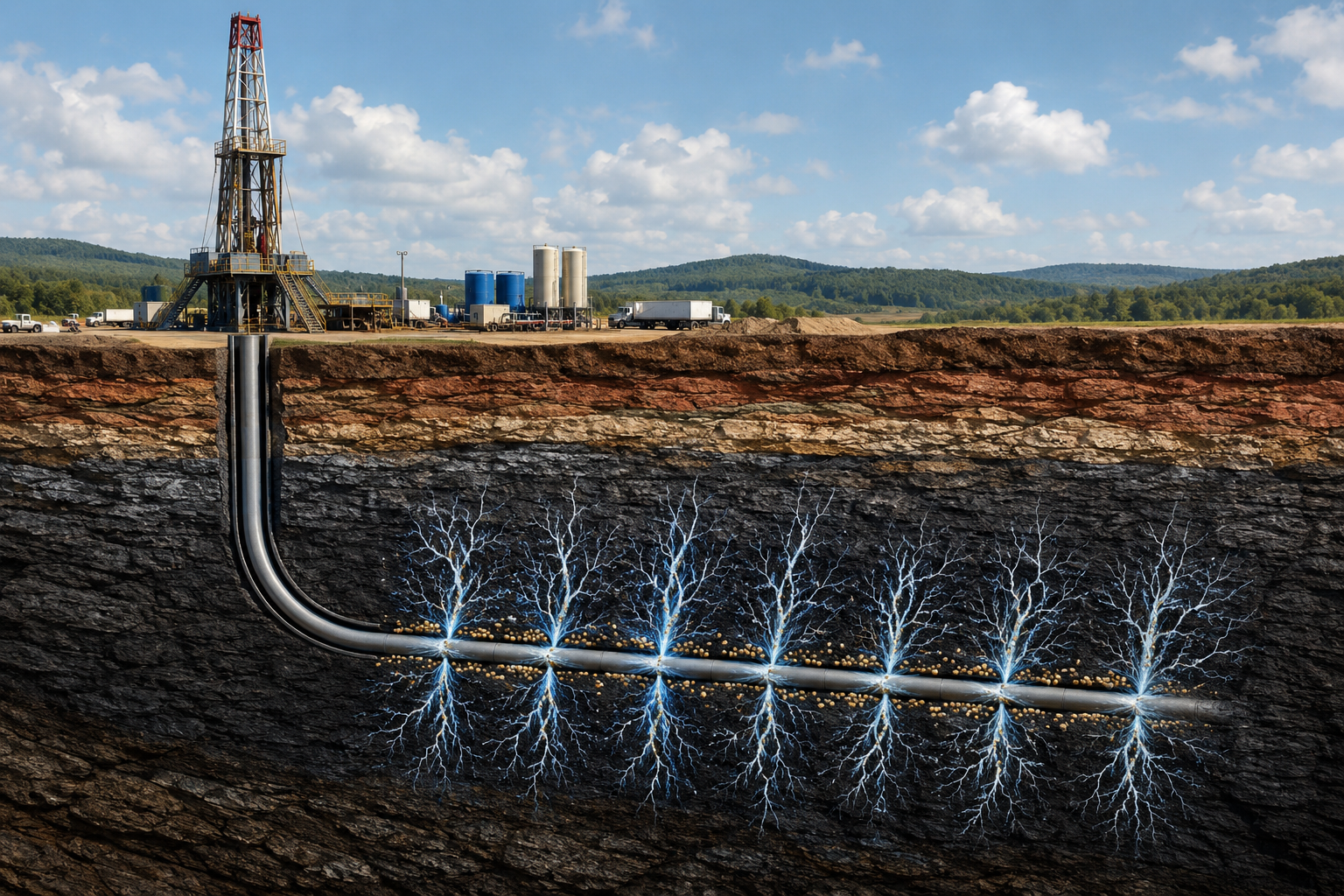
The process begins by drilling a vertical well from the surface down to the target rock formation, which may lie several thousand feet below ground. Once the drill reaches the desired depth, it gradually turns horizontally and continues through the shale layer.
Horizontal drilling allows a single well to access a much larger section of the rock formation than a traditional vertical well, increasing production while reducing the number of drilling sites needed.
Step 2: Installing Steel Casing and Cement
To protect underground freshwater aquifers, the drilled well is lined with multiple layers of steel casing. Cement is then pumped between the casing and the surrounding rock to create a sealed barrier.
These protective layers are designed to prevent oil, gas, or fracturing fluids from entering groundwater supplies and to maintain the structural integrity of the well.
Step 3: Perforating the Well
Once the well has been completed, a specialized tool carrying explosive charges is lowered into the horizontal section.
The charges create small holes through the steel casing and cement, allowing access to the surrounding rock formation where the oil or natural gas is trapped.
Step 4: Hydraulic Fracturing
The key stage of the process involves pumping a high-pressure mixture of water, sand, and chemical additives into the well.
The immense pressure creates tiny cracks, or fractures, in the surrounding rock. As the fractures form, the sand—often called a proppant—becomes lodged within them, helping keep the cracks open after the pressure is released.
This creates pathways through which oil and natural gas can flow into the well.
Step 5: Recovering Oil and Natural Gas
After the fracturing process is complete, some of the injected fluid returns to the surface as “flowback water.” The remaining fluid stays underground within the rock formation.
Oil and natural gas begin flowing through the newly created fractures into the well, where they are collected and transported for processing and distribution.
A single well may continue producing hydrocarbons for many years, although production typically declines over time.
Materials Used in Fracturing
The fracturing fluid generally consists of:
- Approximately 90–95% water.
- About 4–9% sand or another proppant.
- Less than 1% chemical additives.
The additives serve various purposes, including reducing friction, preventing bacterial growth, minimizing corrosion, and improving the efficiency of the fracturing process. The exact formulation varies depending on geological conditions and operational requirements.
Advantages of Hydraulic Fracturing
Hydraulic fracturing has significantly increased access to domestic energy resources around the world. Some of its major benefits include:
- Increased production of oil and natural gas.
- Reduced dependence on imported energy in some countries.
- Lower natural gas prices in many markets.
- Job creation across the energy sector.
- Greater flexibility in meeting electricity demand through expanded natural gas supplies.
Natural gas also produces lower carbon dioxide emissions than coal when burned for electricity generation, contributing to reduced emissions in regions where it replaces coal-fired power plants.
Environmental Concerns
Despite its economic benefits, hydraulic fracturing remains controversial due to several environmental concerns.
One issue is the large volume of water required for each well, which can place pressure on local water supplies in drought-prone regions.
Another concern involves the management and disposal of flowback water, which may contain dissolved minerals, naturally occurring salts, and other substances that require careful treatment.
Methane leaks from wells and associated infrastructure are also an important consideration because methane is a potent greenhouse gas. Reducing leaks through improved equipment and monitoring has become a significant focus within the industry.
Some communities also express concerns about increased truck traffic, noise, air quality, and land disturbance associated with drilling operations.
Induced Seismic Activity
Hydraulic fracturing itself generally produces only very small seismic events that are rarely felt at the surface. However, in some regions, larger earthquakes have been associated with the underground injection of wastewater into deep disposal wells rather than the fracturing process itself.
Regulators and industry operators increasingly monitor seismic activity and may adjust or suspend operations if elevated seismic risks are detected.
Regulation and Safety
Most countries that permit hydraulic fracturing regulate well construction, groundwater protection, chemical handling, wastewater management, and air emissions.
Modern wells are typically subject to inspections throughout drilling, completion, and production. Advances in well design, monitoring technology, and operational practices continue to improve safety and reduce environmental risks, although regulations and enforcement vary by jurisdiction.
Conclusion
Hydraulic fracturing has reshaped the global energy landscape by unlocking vast reserves of oil and natural gas that were once considered inaccessible. Through a combination of horizontal drilling and high-pressure fluid injection, the technology enables energy production from dense rock formations while supporting industries, electricity generation, and economic growth.
At the same time, concerns surrounding water use, methane emissions, wastewater management, and seismic activity have led to ongoing scientific research, technological improvements, and regulatory oversight. As countries continue to balance energy security with environmental protection and climate goals, hydraulic fracturing remains one of the most significant—and most debated—technologies in modern energy production.
Member discussion