
It is one of the most common objects in our daily lives, yet few people stop to think about the fascinating science behind it. With the flip of a switch, a dark room is instantly filled with light. Whether at home, in the office, or on the street, light bulbs have transformed the way we live, extending our productive hours far beyond sunset. Although modern lighting technology has evolved significantly over the years, the basic principles behind producing light are both elegant and surprisingly easy to understand.
To appreciate how a light bulb works, it helps to first understand what light actually is. Light is a form of energy known as electromagnetic radiation. When certain materials receive energy, their atoms become excited and release that energy in the form of visible light. Different types of light bulbs achieve this process in different ways, but they all share the same goal: converting electrical energy into light.
The Journey of Electricity
Every time you switch on a light, you complete an electrical circuit. Electricity flows from the power source, through the wiring in your home, and into the light bulb. The bulb is specifically designed to control how this electrical energy is converted into light.
Inside the bulb are carefully engineered components that either heat a material until it glows or stimulate a semiconductor to emit light directly. The method depends on the type of bulb being used, but the underlying principle remains the same: electrical energy is transformed into visible light.
How Traditional Incandescent Bulbs Work
For more than a century, incandescent bulbs were the standard form of household lighting. Their design is remarkably simple but highly effective.
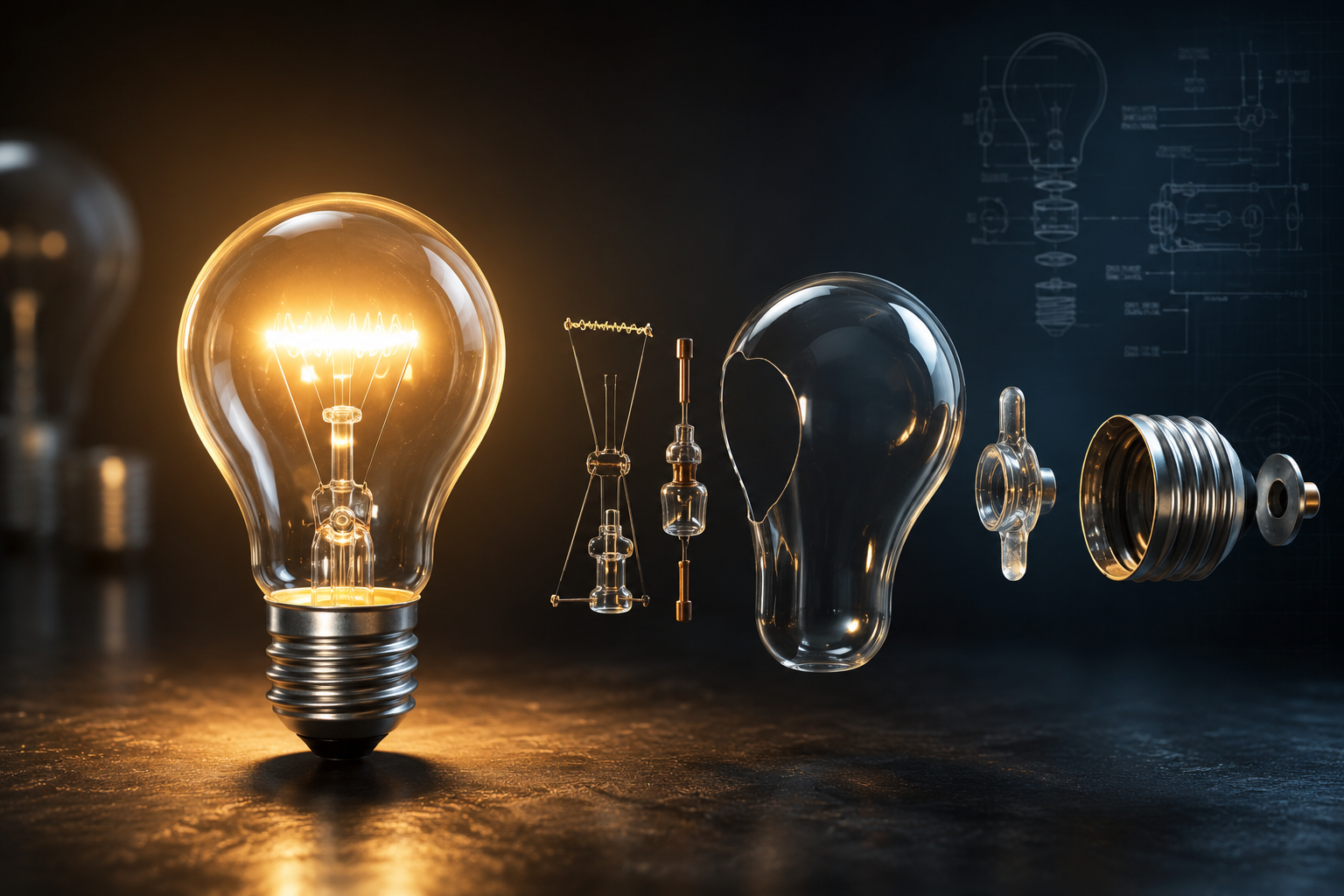
At the center of the glass bulb is an extremely thin filament, usually made from tungsten. Tungsten is chosen because it has one of the highest melting points of any metal, allowing it to withstand extremely high temperatures without melting.
As electricity passes through the filament, it encounters electrical resistance. This resistance causes the filament to heat rapidly, reaching temperatures of around 2,500 to 3,000 degrees Celsius. At such extreme temperatures, the filament begins to glow, producing the warm light that many people associate with traditional bulbs.
Because the filament becomes so hot, most of the electrical energy is actually converted into heat rather than visible light. In fact, only a small percentage of the energy becomes light, making incandescent bulbs relatively inefficient compared to modern alternatives.
Why the Glass Bulb Is Important
The familiar glass enclosure surrounding the filament serves an essential purpose. If the hot tungsten filament were exposed directly to oxygen in the air, it would burn almost instantly.
To prevent this, manufacturers remove most of the air from inside the bulb or fill it with inert gases such as argon or nitrogen. These gases do not react with the hot filament, allowing it to operate safely for hundreds or even thousands of hours.
The glass also protects the delicate filament from dust, moisture, and accidental contact.
How LED Bulbs Work
Today, LED bulbs have largely replaced incandescent bulbs because they consume far less electricity while lasting much longer.
LED stands for Light Emitting Diode. Unlike incandescent bulbs, LEDs do not rely on heating a filament. Instead, they use semiconductor materials that emit light when electricity passes through them.
Inside the semiconductor, electrons move from one energy level to another. As they do so, they release energy directly in the form of photons, which are the tiny particles that make up light.
Because very little energy is wasted as heat, LEDs are dramatically more efficient. They produce the same amount of light while using only a fraction of the electricity required by older bulbs.
Why LED Bulbs Last So Long
One of the biggest advantages of LED technology is its lifespan. Since there is no fragile filament to burn out, LEDs experience much less wear over time.
Most LED bulbs are designed to operate for 15,000 to 50,000 hours, compared to roughly 1,000 hours for a typical incandescent bulb. This longer lifespan reduces waste, lowers replacement costs, and makes LEDs a more environmentally friendly lighting solution.
Different Colors of Light
Not all light bulbs produce the same type of light. The color of light depends on its color temperature, which is measured in Kelvin.
Warm white light, often around 2,700 Kelvin, creates a cozy and comfortable atmosphere similar to traditional incandescent bulbs. Neutral white light provides a balanced appearance that works well in kitchens and offices, while cool white or daylight bulbs produce a brighter, bluish light that is often preferred for workshops, garages, or reading areas.
Many modern LED bulbs even allow users to change the color temperature or select millions of colors using smartphone apps or smart home systems.
Energy Efficiency Matters
Lighting accounts for a significant portion of electricity consumption in many homes and businesses. Because LEDs convert much more electrical energy into light instead of heat, they help reduce electricity bills while lowering overall energy demand.
This improved efficiency also means fewer greenhouse gas emissions when electricity is generated from fossil fuels, making modern lighting an important contributor to energy conservation efforts around the world.
The Evolution of Lighting
The invention of the practical light bulb fundamentally changed society. It made factories more productive, improved public safety, extended working hours, and transformed everyday life after sunset.
Since then, lighting technology has continued to evolve from incandescent bulbs to fluorescent lamps and now to highly efficient LED systems. Researchers are already developing even more advanced lighting technologies that offer greater efficiency, improved color quality, and smarter integration with modern homes and cities.
Conclusion
Although flipping a light switch feels almost effortless, the science behind a light bulb is a remarkable combination of physics, engineering, and materials science. Whether by heating a tungsten filament until it glows or using sophisticated semiconductors to emit photons directly, every light bulb performs the same essential task: converting electrical energy into visible light.
Modern lighting has become safer, brighter, more efficient, and longer-lasting than ever before. The humble light bulb may seem ordinary, but it remains one of humanity’s most important inventions, quietly illuminating our homes, workplaces, and communities every single day.
Subscribe for free and receive a six-part email course that walks you through the process of turning your expertise into a product, helping you move beyond selling your time for money.
Member discussion