

Reading a novel or watching a great film is about far more than following a story. The plot may entertain us, but the greatest works of fiction leave a lasting impression because they reveal something deeper about human nature. They explore timeless questions, challenge our assumptions, and allow us to experience perspectives we could never encounter in our own lives. Yet these lessons are often missed because we consume stories passively. We follow the events, reach the ending, and move on to the next book or film without taking the time to understand what made the experience so meaningful.
This is why the Examine step of the READ framework is so important. Before we can apply the lessons of a story to our own lives, we first need to understand what the story is really saying. Great fiction rarely communicates its message directly. Instead, it invites us to discover it through characters, themes, symbols, and the way the story itself is constructed.
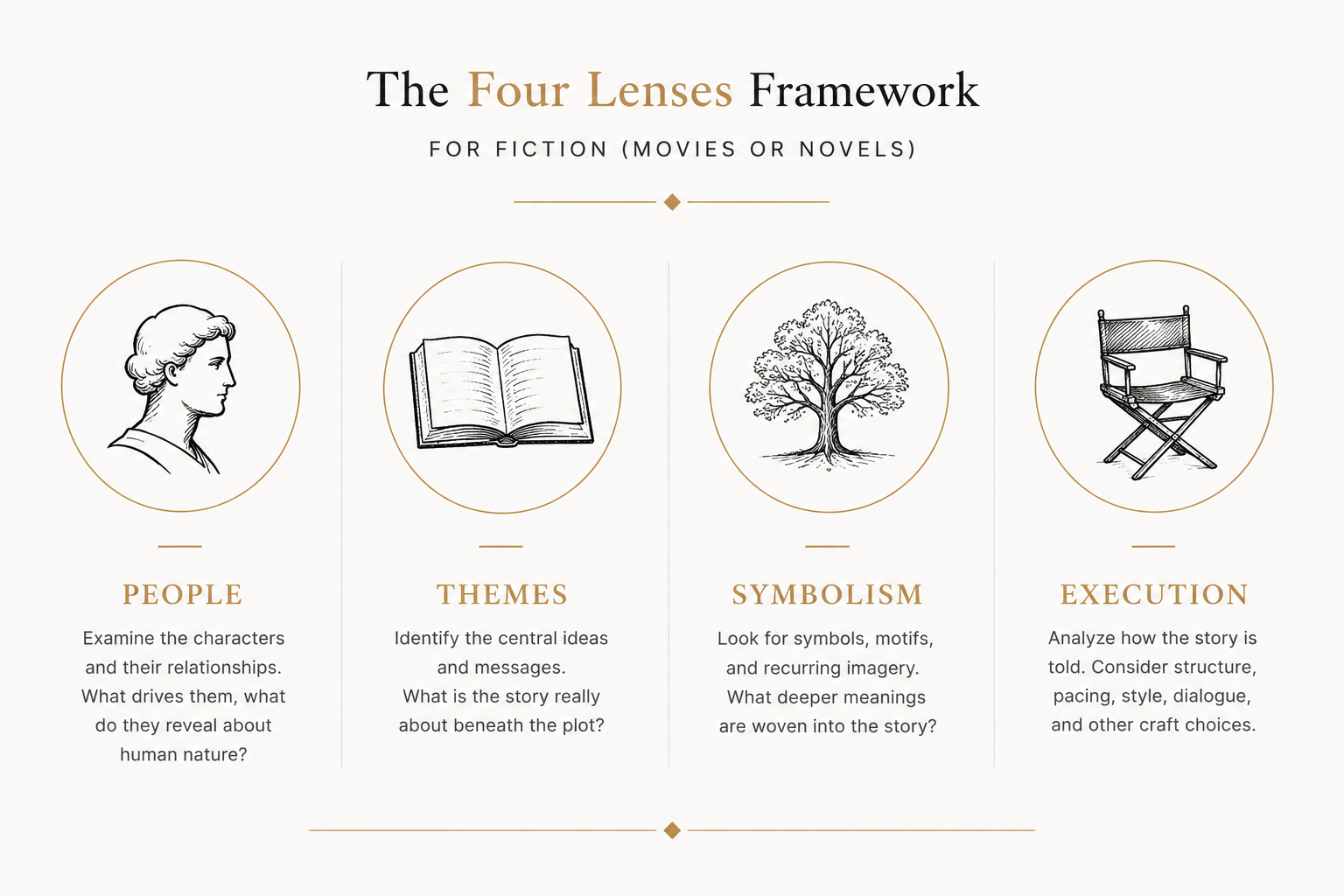
The Four Lenses Framework provides a simple method for examining novels and films more thoughtfully. Each lens encourages you to look beyond the surface and uncover another layer of meaning. The more lenses you use, the richer your understanding becomes.
Lens One: People
Stories are ultimately about people. Even in fantasy worlds, historical dramas, or science fiction, the characters are mirrors through which we explore ourselves. Their struggles become our struggles, their fears become our fears, and their victories often reveal the qualities we aspire to develop ourselves.
When examining a story through the lens of people, ask yourself which characters drew you in and why. Which ones did you admire? Which ones frustrated or even repelled you? What virtues did they embody? What flaws ultimately became their downfall? Sometimes the most important character is not the hero but the antagonist, because they reveal values we reject or temptations we recognize within ourselves.
It is equally valuable to ask which character you identified with most strongly. Our emotional connection often reveals something about our own personality, aspirations, or unresolved challenges. Fiction allows us to safely observe ourselves through the lives of others, making characters one of the richest sources of self-understanding.
Lens Two: Themes
Once you understand the people, step back and ask a broader question: What is this story really about?
Every memorable work of fiction explores a small number of universal themes. Love and sacrifice. Power and corruption. Courage and fear. Freedom and responsibility. Identity and belonging. These themes are what transform an entertaining story into a meaningful one because they connect a specific narrative to universal human experience.
Rather than focusing on individual events, look for recurring ideas that appear throughout the story. What conflicts keep resurfacing? What questions does the author seem determined to explore? What values are rewarded, and which ones ultimately lead to suffering? When viewed through the lens of themes, seemingly unrelated scenes often reveal themselves as different expressions of the same central idea.
Understanding the themes helps explain why certain stories remain relevant for generations. Although the settings, cultures, and characters may change, the underlying human questions remain timeless.
Lens Three: Symbolism
Great stories often communicate their deepest ideas indirectly. Rather than explaining everything explicitly, they use symbols, recurring images, objects, locations, or events that represent something beyond their literal meaning.
A journey may symbolize personal growth. A storm may reflect emotional turmoil. A house may represent safety, tradition, or even imprisonment. An old watch, a recurring color, a repeated phrase, or a seemingly insignificant object may carry profound symbolic weight throughout the story.
Examining symbolism requires patience because symbols are rarely announced. Instead, they reveal themselves through repetition and context. Ask yourself whether certain images appear repeatedly, whether particular objects seem unusually important, or whether locations carry emotional significance beyond their practical role in the story.
Symbolism rewards attentive readers because it often communicates the author's deepest message without ever stating it directly. The more you recognize these hidden layers, the more rewarding each rereading becomes.
Lens Four: Execution
The final lens shifts attention from what the story says to how it says it. Every author and filmmaker makes thousands of creative decisions that shape the audience's experience. The pacing, dialogue, structure, point of view, imagery, and narrative techniques all influence how the story affects us emotionally and intellectually.
Instead of simply asking whether you enjoyed the work, ask why it had that effect. Why did one scene create tension while another brought relief? How did the author make you care about a particular character? Why did a certain plot twist feel surprising yet inevitable? How did the opening prepare you for the ending?
Studying execution develops a deeper appreciation for craftsmanship. It teaches us that great storytelling is rarely accidental. Every powerful scene is usually the result of deliberate creative choices. Whether you aspire to become a writer yourself or simply wish to become a more thoughtful reader, examining the craft behind the work reveals lessons that are invisible during passive consumption.
Bringing the Four Lenses Together
Each of these four lenses reveals something different. People help us understand human nature. Themes reveal the universal ideas beneath the story. Symbolism uncovers hidden meaning. Execution teaches us how those ideas were communicated so effectively.
None of these lenses is sufficient on its own. A novel may contain fascinating characters, but without understanding its themes, its deeper message remains hidden. A story may contain beautiful symbolism, but without appreciating its execution, we miss the artistry that makes those symbols meaningful. Together, the four lenses create a richer, more complete understanding of every work of fiction.
Most people finish a novel or a film asking, Did I enjoy it? While enjoyment matters, it is only the beginning. A better question is, What did this work reveal about people, about life, and about myself? By examining stories through these four lenses, fiction becomes more than entertainment. It becomes one of the most powerful teachers we can encounter, offering wisdom that extends far beyond the final page or the closing credits.
Member discussion