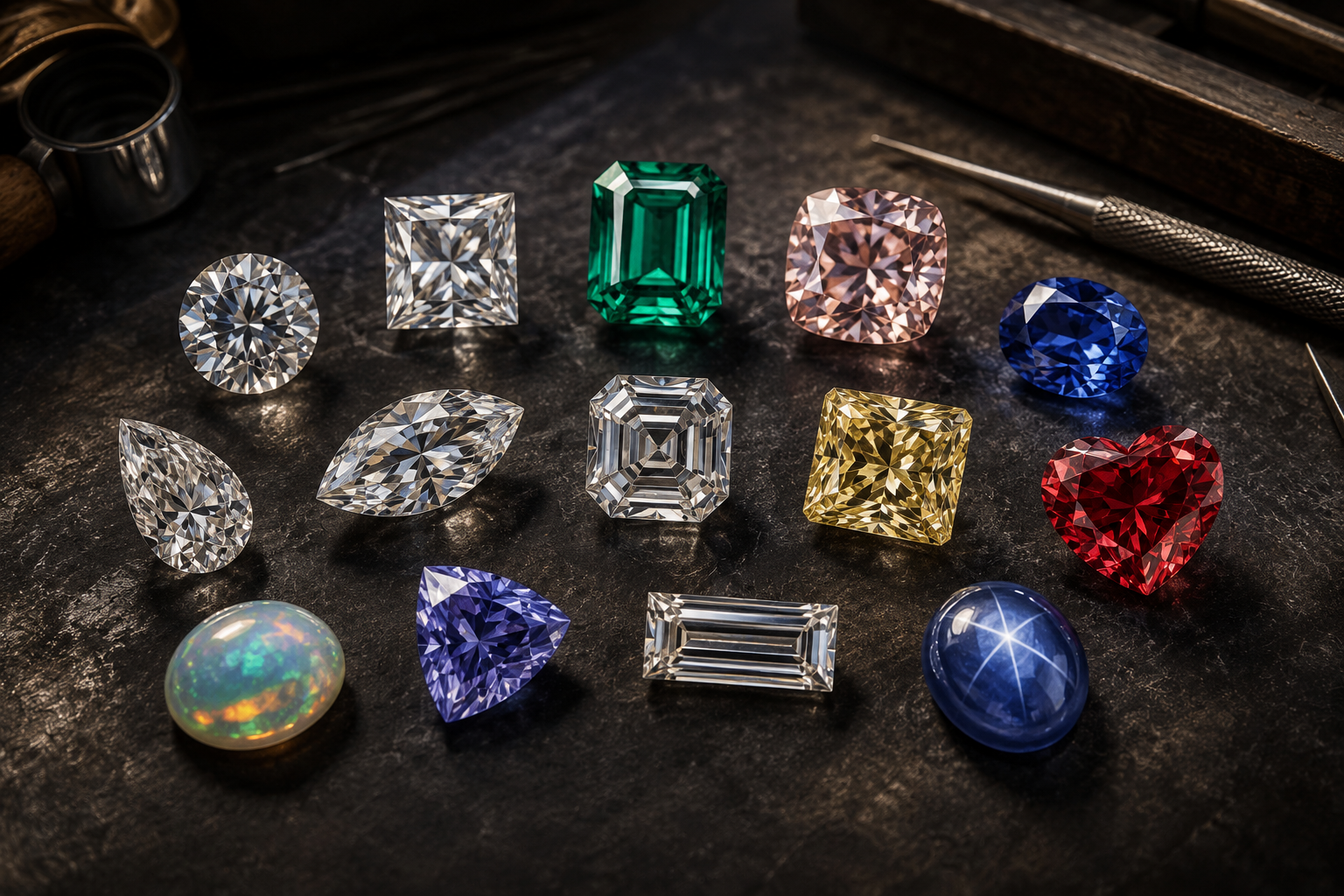

A gemstone begins its journey looking surprisingly ordinary. Fresh from the earth, it is rough, uneven, and often covered in imperfections. To the untrained eye, it may not appear valuable at all. Yet within that rough exterior lies extraordinary beauty waiting to be revealed. The transformation from rough crystal to dazzling gemstone is not accidental. It is the result of one of the oldest and most respected crafts in the world: gem cutting.
A master gem cutter does far more than shape a stone. They study its internal structure, examine its inclusions, evaluate its color, and determine the precise cut that will unlock its maximum brilliance. Every decision matters. Remove too much material, and valuable weight is lost. Cut at the wrong angle, and light escapes instead of returning to the eye. Every cut tells a different story.
Why Gemstone Cuts Matter
Many people believe a gemstone’s beauty comes primarily from its size or rarity. While these are important factors, the cut is often what determines whether a gemstone appears breathtaking or dull.
A well-cut gemstone controls how light enters, reflects, and exits the stone. This interaction creates three essential qualities:
- Brilliance — the amount of white light reflected.
- Fire — the flashes of rainbow colors produced through dispersion.
- Scintillation — the sparkle seen as the stone moves.
Even an exceptionally rare diamond can appear lifeless if poorly cut, while a more modest stone with an exceptional cut can appear remarkably vibrant. The cut is where science meets art.
The Round Brilliant Cut
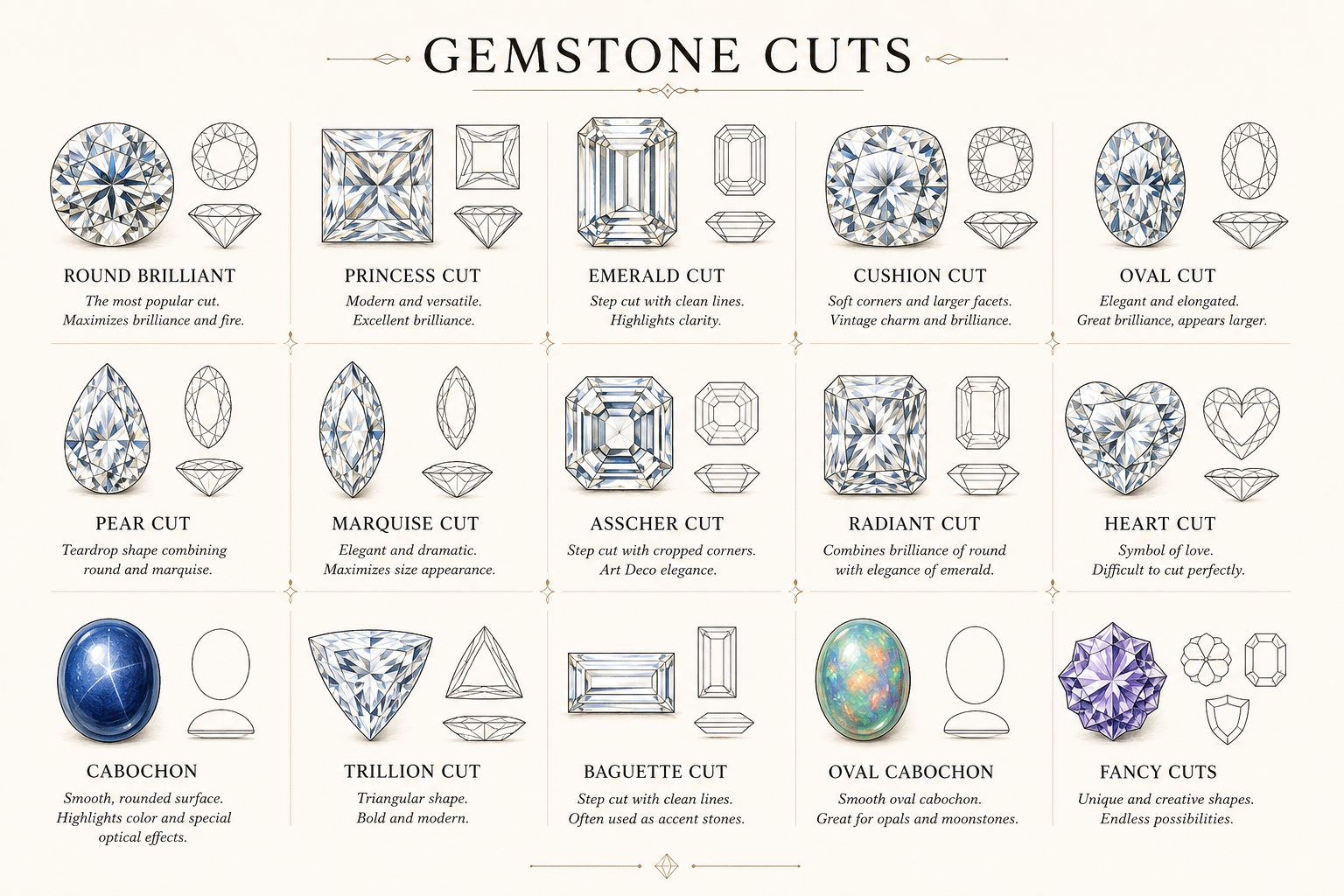
Perhaps no gemstone cut is more famous than the Round Brilliant. Developed through centuries of refinement, the modern round brilliant is designed to maximize light return. Typically featuring 57 or 58 facets, every angle has been carefully calculated to produce extraordinary brilliance.
This cut is ideal for:
- Diamonds
- White sapphires
- Moissanite
- High-clarity gemstones
It is considered the brightest of all gemstone cuts and remains the world’s most popular choice for engagement rings. Its symbolism is equally fitting. The circle has no beginning or end, representing eternity, unity, and wholeness.
The Princess Cut
The Princess Cut combines modern geometry with exceptional sparkle. Square in shape but brilliant in performance, it retains much of the rough crystal during cutting, making it both beautiful and efficient. Its sharp corners create a contemporary appearance while still producing impressive fire. This cut appeals to those who appreciate clean lines, balance, and modern elegance.
The Emerald Cut
Unlike brilliant cuts that emphasize sparkle, the Emerald Cut celebrates clarity. Its long rectangular facets create what is known as a “hall of mirrors” effect. Instead of explosive flashes of light, the viewer experiences deep reflections that seem to draw the eye into the stone itself. Because of its large open table, inclusions become far more visible. Only gemstones with exceptional clarity truly excel in this cut. It represents sophistication, honesty, and quiet confidence.
The Cushion Cut
With softly rounded corners and larger facets, the Cushion Cut has existed for nearly two centuries. Often called the “pillow cut,” it combines vintage romance with modern brilliance. Its larger facets create broader flashes of light rather than countless tiny sparkles. This cut has become especially popular for colored gemstones, where it enhances depth and richness of color.
The Oval Cut
The Oval Cut offers brilliance comparable to the Round Brilliant while creating the illusion of a larger stone. Its elongated shape can make fingers appear longer and more elegant when set in jewelry. Because the cut spreads weight across a larger surface area, buyers often receive more visual size for the same carat weight. Oval cuts symbolize movement, growth, and individuality.
The Pear Cut
Part round, part marquise, the Pear Cut resembles a delicate teardrop. It combines softness with drama and directs the eye toward its pointed tip. When worn in jewelry, it often symbolizes tears of joy, emotional growth, and new beginnings. Proper symmetry is essential. Even slight imbalance becomes immediately noticeable.
The Marquise Cut
Long, elegant, and dramatic, the Marquise Cut is instantly recognizable. Legend says it originated in 18th-century France, commissioned by King Louis XV to resemble the smile of his mistress. Its pointed ends create one of the largest face-up appearances of any gemstone cut. It offers elegance while maximizing visual size.
The Asscher Cut
The Asscher Cut resembles a square Emerald Cut but features deeply cropped corners. Its concentric step facets create remarkable geometric symmetry. Rather than sparkling wildly, it produces hypnotic reflections that seem almost architectural. Popular during the Art Deco period, it remains a favorite among lovers of vintage design.
The Radiant Cut
The Radiant Cut merges the brilliance of the Round Cut with the elegance of the Emerald Cut. Its trimmed corners improve durability while its brilliant facets produce exceptional sparkle. This versatility makes it suitable for nearly every gemstone. It is often chosen by those who want both glamour and practicality.
The Heart Cut
The Heart Cut is among the most difficult cuts to execute perfectly. Every curve must be symmetrical, while the central cleft must remain crisp and balanced. When cut correctly, it is unmistakable. Although often associated with romance, it also represents compassion, generosity, and emotional openness.
Cabochon
Not every gemstone is faceted. The Cabochon features a smooth, polished dome without facets. This style is preferred for gemstones that display unique optical effects such as:
- Opals
- Moonstones
- Star sapphires
- Cat’s eye chrysoberyl
- Turquoise
Rather than maximizing brilliance, the cabochon emphasizes color, texture, and natural phenomena. Its beauty comes from simplicity.
The Trillion Cut
The Trillion Cut is a striking triangular gemstone shape that combines bold geometry with exceptional brilliance. Its sharp points and brilliant-style facets create lively flashes of light, making it a popular choice for both center stones and accent gems. Originally developed in the 20th century, the cut offers a modern, contemporary aesthetic while maximizing the stone’s visual spread. It is especially well suited to diamonds, sapphires, and colored gemstones, where its unique shape can enhance both sparkle and color. Symbolically, the triangle has long represented strength, balance, and forward movement, giving the Trillion Cut a sense of confidence and innovation that sets it apart from more traditional gemstone shapes.
The Baguette Cut
The Baguette Cut is a long, narrow rectangular gemstone cut distinguished by its clean lines and elegant simplicity. Unlike brilliant cuts, it features step facets that produce subtle flashes of light rather than intense sparkle, placing the emphasis on the gemstone’s clarity and color. Originally inspired by the streamlined aesthetics of the Art Deco movement, the Baguette Cut is most often used as an accent stone alongside larger center gems, though it can also create a refined, minimalist look on its own. Its sleek geometric form symbolizes sophistication, precision, and understated elegance, making it a timeless choice for both classic and contemporary jewelry designs.
Fancy Cuts
Beyond traditional shapes lies a world of creativity. Fancy cuts include flowers, leaves, shields, hexagons, trillions, kites, stars, and countless custom designs. Advances in laser cutting and computer-guided precision now allow gem artists to create intricate optical masterpieces that would have been impossible only decades ago. Many are true works of art rather than simply gemstones.
Choosing the Right Cut
There is no universally “best” gemstone cut. The ideal choice depends upon:
- The gemstone species
- Color intensity
- Clarity
- Crystal shape
- Intended jewelry design
- Personal taste
A diamond may reach its greatest brilliance as a Round Brilliant, while an emerald achieves its finest expression in an Emerald Cut. An opal often reveals its magic only as a cabochon. The cutter works with the stone rather than against it.
Every Stone Has Its Own Potential
Perhaps the greatest lesson gemstones teach us is that beauty is never one-size-fits-all. Every rough crystal contains unique strengths, limitations, and possibilities. The master’s role is not to force every stone into the same shape, but to discover the cut that allows each one to express its greatest beauty. Some shine through explosive brilliance. Others captivate through depth, color, symmetry, or quiet elegance. Nature provides the potential. Human craftsmanship reveals it. And together, they transform something ordinary into something extraordinary.
Member discussion