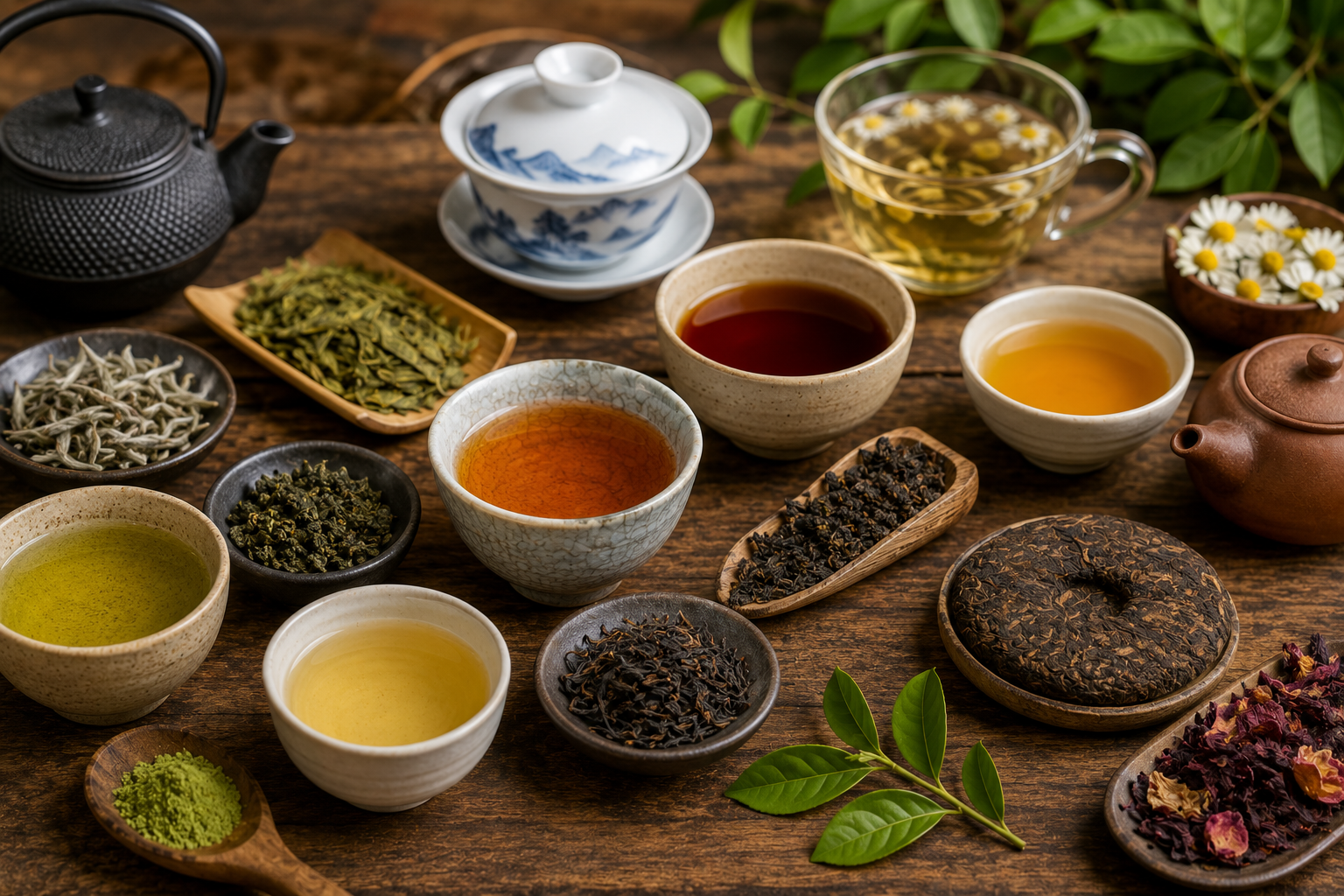

Tea is one of the world's oldest and most beloved beverages. Every day, billions of cups are enjoyed across every continent, each reflecting centuries of tradition, culture, and craftsmanship. From the delicate floral notes of white tea to the deep, malty richness of black tea, every variety offers a unique experience. What surprises many people is that nearly all traditional teas come from the very same plant. The remarkable diversity of flavours, aromas, and colours is not the result of different species but of how the leaves are harvested, processed, and oxidised after picking.
Understanding the different types of tea not only makes choosing your next cup easier but also reveals the fascinating science and artistry behind one of humanity's oldest drinks.
The Tea Plant
All traditional teas originate from the leaves of Camellia sinensis, an evergreen shrub native to East Asia. Over thousands of years, this plant has been cultivated in regions including China, Japan, India, Sri Lanka, Taiwan, Kenya, and many others, each producing teas with distinctive characteristics influenced by climate, altitude, soil, and local processing techniques.
Much like grapes used for wine, tea leaves develop unique flavour profiles depending on where they are grown. However, geography is only part of the story. The greatest differences arise after the leaves have been picked. By controlling how much the leaves are allowed to oxidise and how they are dried, rolled, heated, or fermented, tea producers create an extraordinary range of styles from a single plant.
White Tea: The Purest Expression
White tea undergoes the least processing of all traditional teas. Young buds and tender leaves are harvested, then simply withered and carefully dried with minimal handling. Because the leaves experience very little oxidation, they retain much of their natural appearance and delicate flavour.
The result is a tea with subtle floral aromas, gentle sweetness, and a light, almost silky body. White tea is often appreciated for its elegance rather than its intensity, making it an excellent choice for those who enjoy refined and nuanced flavours.
Since the leaves are processed so gently, white tea also retains high levels of naturally occurring antioxidants. While many health claims surrounding tea should be viewed with caution, white tea is widely valued as part of a balanced diet due to its rich concentration of beneficial plant compounds.
Green Tea: Fresh and Vibrant
Green tea is produced by preventing oxidation almost immediately after harvesting. The freshly picked leaves are heated, either through steaming or pan-firing, to deactivate the enzymes responsible for oxidation. They are then rolled and dried before packaging.
This rapid preservation allows the leaves to retain their characteristic green colour and fresh, grassy flavour. Depending on where it is produced, green tea can display notes ranging from seaweed and spinach to toasted nuts, chestnuts, citrus, or sweet spring flowers.
Japanese green teas, such as Sencha and Matcha, are typically steamed, resulting in bright green colours and vegetal flavours. Chinese green teas are more commonly pan-fired, producing warmer, nuttier characteristics.
Green tea has become particularly popular because of its refreshing taste and moderate caffeine content, making it a favourite throughout the day.
Black Tea: Rich and Robust
Black tea is the most widely consumed tea in many parts of the world. Unlike green tea, the leaves are intentionally allowed to oxidise fully before drying. During oxidation, natural chemical reactions transform the leaves from green to dark brown or black while producing the rich aromas and deep flavours associated with black tea.
The flavour profile varies considerably depending on origin. Assam tea from India is bold and malty, Darjeeling often displays floral and muscatel notes, while Ceylon tea from Sri Lanka is known for its bright, citrus-like character.
Because black tea develops a stronger flavour than lighter teas, it pairs well with milk, lemon, spices, and sweeteners. It also forms the foundation of many familiar blends, including English Breakfast and Earl Grey.
Oolong Tea: The Art of Balance
Oolong tea occupies the fascinating middle ground between green and black tea. Its leaves are only partially oxidised, allowing producers to create an enormous spectrum of flavours depending on the exact level of oxidation and the techniques used during processing.
Some oolongs resemble green tea with fresh floral aromas and creamy textures, while others approach black tea with roasted, honeyed, or caramel-like notes. Many premium oolong teas undergo multiple stages of rolling and roasting, requiring exceptional craftsmanship that has been refined over generations.
Because of this complexity, oolong is often regarded as one of the most sophisticated categories of tea, offering remarkable depth and variety in every cup.
Pu-erh Tea: Aged Like Fine Wine
Pu-erh tea is unlike any other traditional tea because it continues to evolve long after production. Originating from China's Yunnan Province, Pu-erh undergoes a process of microbial fermentation and ageing that gradually transforms its flavour over time.
Young Pu-erh teas can taste fresh and slightly bitter, while older varieties develop earthy, woody, leathery, and sometimes surprisingly sweet characteristics. Some carefully aged Pu-erh teas become highly sought after by collectors in much the same way that fine wines are appreciated.
The ageing process gives Pu-erh a complexity that many tea enthusiasts find endlessly fascinating.
Yellow Tea: A Rare Delicacy
Yellow tea is one of the least common varieties and is produced using a specialised process that includes a gentle steaming stage followed by slow, controlled resting before drying. This extra step softens the grassy notes found in green tea and creates a smoother, sweeter flavour.
Because yellow tea requires considerable skill and time to produce, it remains relatively rare outside China. Those fortunate enough to try it often appreciate its mellow character and refined sweetness.
Herbal Teas: Not Actually Tea
Although they are commonly called teas, herbal infusions are technically not tea at all because they do not come from the Camellia sinensis plant.
Instead, they are made by steeping herbs, flowers, fruits, spices, roots, or seeds in hot water. Popular examples include chamomile, peppermint, rooibos, hibiscus, ginger, and lemongrass.
Each herbal infusion offers its own distinctive flavour and aroma. Since most do not contain caffeine, they are often enjoyed during the evening or as naturally soothing beverages.
How Processing Changes the Flavour
The remarkable diversity of tea is largely the result of oxidation. During this natural process, enzymes within the leaves react with oxygen in the air, gradually altering the colour, aroma, and chemical composition of the tea.
Minimal oxidation produces the light, delicate flavours of white tea. Preventing oxidation entirely preserves the fresh character of green tea. Partial oxidation creates the extraordinary diversity of oolong, while complete oxidation gives black tea its bold richness. Additional fermentation and ageing create the unique characteristics of Pu-erh.
Understanding these processing methods helps explain why teas that originate from the same plant can taste so dramatically different.
Choosing the Right Tea
Selecting the perfect tea depends entirely on personal preference and the occasion. Those seeking a light, refreshing drink may enjoy white or green tea. If a richer, more comforting cup is preferred, black tea is an excellent choice. Oolong offers complexity for those who enjoy exploring subtle flavour variations, while Pu-erh provides an entirely different experience for adventurous tea drinkers. Herbal infusions offer endless possibilities for people looking to enjoy naturally caffeine-free beverages.
Experimenting with different varieties is one of the great pleasures of tea, as each region, harvest, and producer contributes something unique to the final cup.
More Than a Beverage
Tea is far more than a hot drink. It represents thousands of years of agricultural knowledge, craftsmanship, cultural tradition, and scientific understanding. From carefully tending tea gardens on mist-covered mountains to the precise processing techniques that shape every leaf, tea embodies a remarkable combination of nature and human expertise.
The next time you brew a cup, it is worth remembering that behind those simple leaves lies an extraordinary story of chemistry, geography, history, and culture. Whether you prefer the subtle elegance of white tea, the freshness of green tea, the richness of black tea, or the complexity of oolong, every cup reflects centuries of refinement and a shared appreciation for one of the world's most timeless beverages.
Member discussion