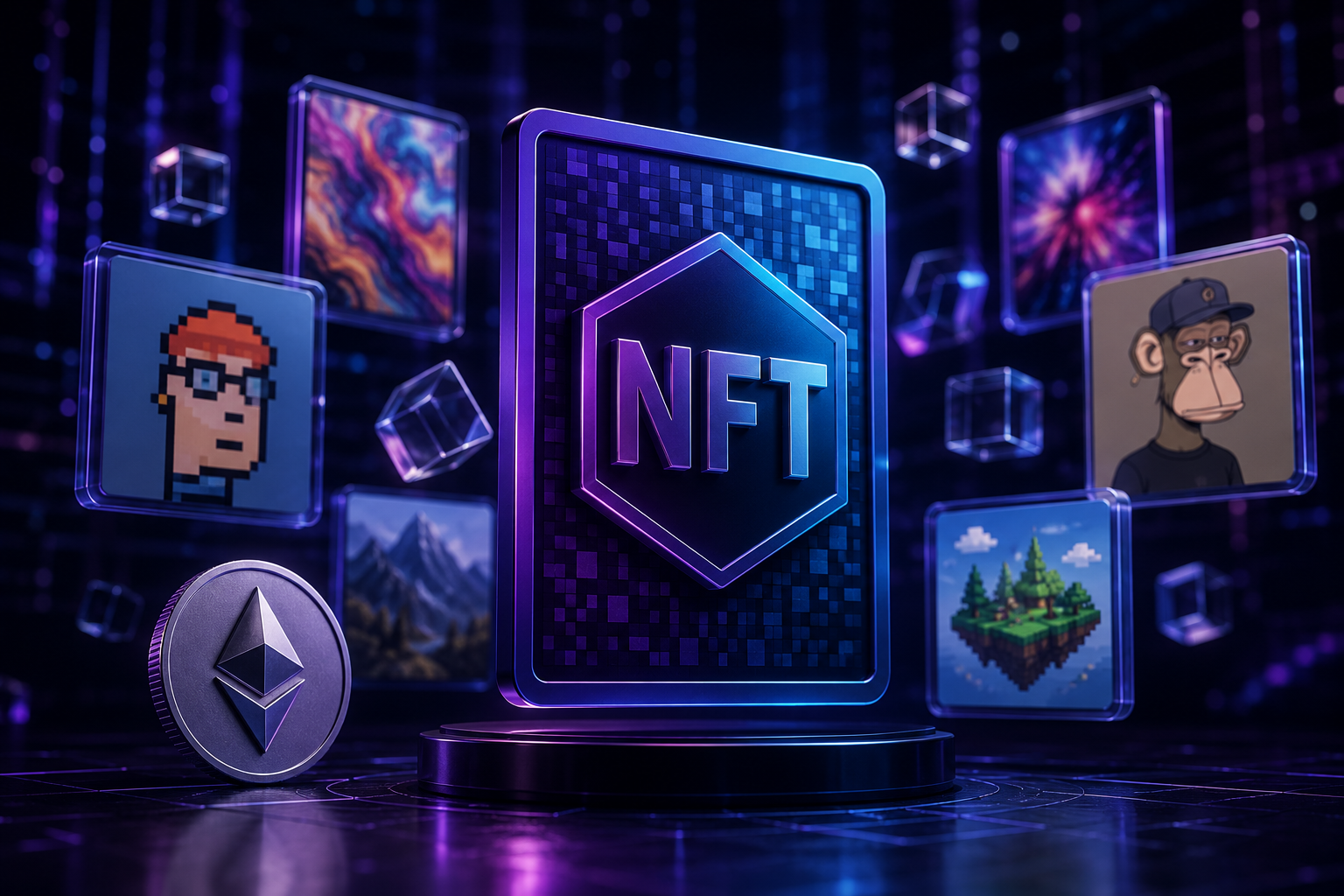

Just a few years ago, NFTs seemed impossible to ignore. Headlines reported digital artworks selling for millions of dollars, celebrities were launching NFT collections almost every week, and major brands rushed to join what many believed was the next revolution of the internet. The excitement was so intense that some predicted NFTs would transform art, gaming, real estate, music, and digital ownership forever.
Then, almost as quickly as they appeared, NFTs seemed to disappear from public conversation. Trading volumes collapsed, prices of many collections fell dramatically, and countless projects simply vanished. Today, many people ask the same question: What happened to NFTs?
The answer is more nuanced than simply saying they failed. The technology itself still exists and continues to be used, but the speculative bubble that surrounded it has largely burst.
What Are NFTs?
NFT stands for Non-Fungible Token, which is a unique digital asset recorded on a blockchain. Unlike cryptocurrencies such as Bitcoin or Ethereum, where every coin is interchangeable, each NFT is designed to be unique.
An NFT can represent ownership of many different digital or physical assets, including artwork, music, videos, collectibles, game items, tickets, memberships, or documents. The blockchain acts as a public ledger that records who owns each token and allows ownership to be transferred securely.
The key innovation was not the digital image itself, but the ability to prove ownership of a unique digital asset.
The NFT Boom
The NFT market exploded during 2021.
Several factors came together at the same time. Cryptocurrencies were reaching record prices, interest rates were low, investors had abundant liquidity, and people were eager to participate in the next major technological trend.
Digital artists suddenly found entirely new ways to sell their work directly to collectors. Major auction houses began offering NFT art, musicians experimented with blockchain-based releases, and global brands launched their own collections.
Perhaps the most famous moment occurred when digital artist Beeple sold an NFT artwork for $69 million, convincing many people that NFTs represented a completely new asset class.
At the peak of the market, some NFT collections sold for hundreds of thousands or even millions of dollars, often within minutes of being released.
Speculation Took Over
Although NFTs introduced genuinely interesting technology, much of the market quickly became driven by speculation rather than utility.
Many buyers were not purchasing NFTs because they valued the artwork or intended to use the technology. Instead, they hoped prices would continue rising so they could sell to someone else for a profit.
This created a classic speculative bubble.
Thousands of nearly identical projects entered the market, promising exclusive communities, future benefits, or unrealistic investment returns. Many collections were launched with little substance beyond attractive marketing and social media hype.
As more investors entered purely for financial gain, prices became increasingly disconnected from actual usefulness.
The Bubble Burst
Like many speculative markets throughout history, the NFT boom eventually slowed.
As cryptocurrency prices declined in 2022, investor enthusiasm faded. Higher interest rates also reduced the availability of speculative capital, making investors more cautious.
Without a constant stream of new buyers willing to pay ever higher prices, many NFT collections rapidly lost value.
Projects that had relied entirely on hype struggled to maintain their communities, and numerous development teams abandoned their roadmaps altogether.
Trading volumes across major NFT marketplaces fell sharply, and many digital collectibles became worth only a tiny fraction of their previous peak prices.
The Technology Was Never the Problem
One important distinction is often overlooked.
The decline of NFT prices does not necessarily mean the underlying technology failed.
Blockchain-based digital ownership remains technically useful in many situations. NFTs can still provide verifiable proof of ownership, authenticity, membership, or access rights.
What largely disappeared was the belief that every NFT would become a valuable investment.
Just as the collapse of the dot-com bubble did not eliminate the internet, the NFT market correction did not eliminate blockchain technology.
Where NFTs Are Still Being Used
Although NFTs receive far less media attention today, they continue to find practical applications.
Gaming companies are experimenting with digital ownership of in-game items. Event organizers use NFT tickets to reduce fraud and simplify verification. Musicians have explored blockchain-based fan memberships and exclusive content. Luxury brands have tested NFTs as certificates of authenticity for high-value products.
Some businesses also use NFTs for digital memberships, loyalty programs, intellectual property management, and supply chain verification.
These applications focus on utility rather than speculation.
Why Public Interest Declined
One reason NFTs largely disappeared from mainstream conversation is that the technology was often marketed in confusing ways.
Many people associated NFTs exclusively with expensive profile pictures or digital artwork, making it difficult to understand their broader potential.
At the same time, scams, fake projects, phishing attacks, and exaggerated marketing damaged public trust. Numerous buyers lost significant amounts of money after purchasing assets whose prices quickly collapsed.
As media coverage shifted from stories of overnight millionaires to stories of financial losses, public enthusiasm naturally declined.
Lessons from the NFT Craze
The NFT boom demonstrated how quickly emerging technologies can become surrounded by speculation.
Innovative technology often attracts enormous excitement before practical use cases fully develop. Investors become optimistic, prices rise rapidly, expectations become unrealistic, and eventually the market corrects itself.
History has seen similar patterns during the railway boom, the dot-com era, cryptocurrency cycles, and many other technological revolutions.
While speculative bubbles eventually burst, the useful innovations often survive and mature more quietly afterward.
What Does the Future Hold?
NFTs are unlikely to disappear completely, but they may become far less visible.
Instead of people talking about buying NFTs, they may simply use applications that rely on NFT technology behind the scenes. Much like people use the internet without thinking about TCP/IP or HTTP, future users may benefit from blockchain-based ownership without needing to understand the underlying mechanics.
If that happens, NFTs may evolve from being a headline-grabbing investment trend into an invisible piece of digital infrastructure.
Conclusion
NFTs did not vanish because the technology stopped working. They faded from public attention because the speculative frenzy surrounding them proved unsustainable. Prices became detached from real-world value, investor enthusiasm cooled, and many projects built on hype rather than utility inevitably failed.
Yet the original idea behind NFTs—creating verifiable digital ownership through blockchain technology—remains relevant. While the days of multimillion-dollar profile pictures may largely be over, practical uses for NFTs continue to emerge in gaming, ticketing, authentication, memberships, and digital commerce.
In hindsight, the NFT boom serves as a reminder that transformative technologies often pass through periods of excessive hype before finding their most valuable and sustainable role. The excitement may have faded, but the technology itself is still evolving, perhaps more quietly and more realistically than before.
Subscribe for free and receive a six-part email course that walks you through the process of turning your expertise into a product, helping you move beyond selling your time for money.
Member discussion