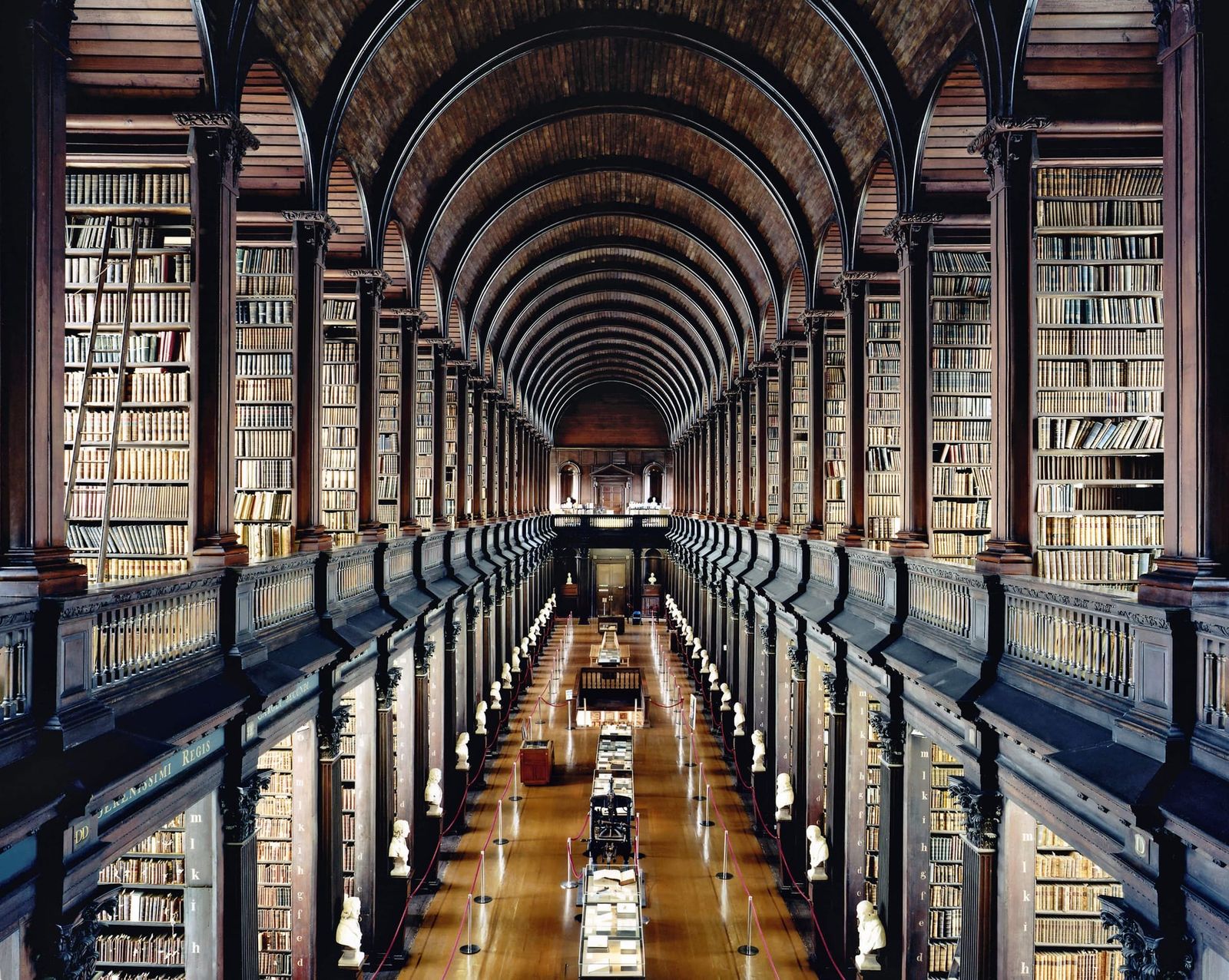

For thousands of years, libraries have served as humanity's collective memory. They are far more than buildings filled with books; they are monuments to curiosity, education, and the relentless pursuit of knowledge. Within their walls are preserved the ideas of philosophers, scientists, historians, poets, and visionaries whose thoughts have shaped civilizations across the centuries. Every manuscript, map, journal, and printed volume represents another piece of our shared intellectual heritage, waiting to be discovered by a new generation of readers.
Some libraries impress through their immense collections, housing millions of books that span nearly every field of human knowledge. Others captivate visitors through breathtaking architecture, transforming reading rooms into masterpieces of art and design. Still others stand as symbols of resilience, having survived wars, fires, political upheaval, and the passage of time while continuing to safeguard priceless cultural treasures.
Whether built in the grandeur of the Renaissance, the elegance of the Baroque period, or the bold style of contemporary architecture, these remarkable institutions remind us that knowledge has always been among humanity's greatest achievements. Visiting them is often less like entering a building and more like stepping into a cathedral dedicated to learning.
The Library of Congress – Washington, D.C., United States
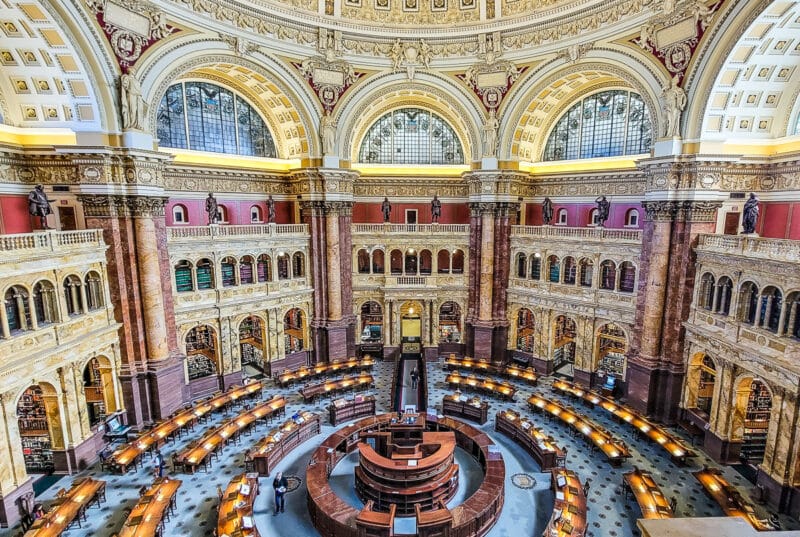
The Library of Congress is widely regarded as the largest library in the world. Established in 1800 to support the United States Congress, it has grown into an institution of extraordinary scale, containing well over 170 million items, including books, manuscripts, photographs, maps, newspapers, recordings, films, and rare historical documents.
Its Thomas Jefferson Building is particularly spectacular. Marble staircases, gilded ceilings, mosaics, sculptures, and elaborate murals transform the library into one of America's most beautiful public buildings. The famous Main Reading Room, crowned by a magnificent dome rising over fifty metres above the floor, is often considered one of the most impressive reading spaces ever constructed.
Beyond its architectural beauty, the Library of Congress functions as one of the world's most important centres for research and preservation. Every year, millions of new materials are added, ensuring that future generations will continue to benefit from an ever-expanding archive of human knowledge.
The British Library – London, England
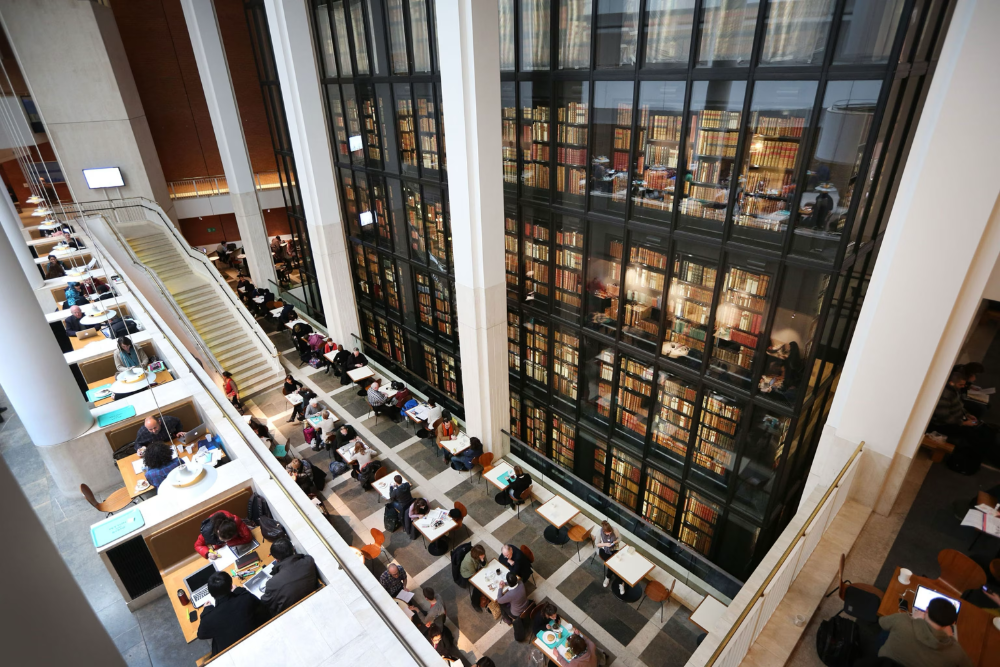
As the national library of the United Kingdom, the British Library holds one of the most significant collections of written works anywhere in the world. Its shelves contain more than 170 million items, representing almost every known language and countless centuries of human history.
Among its greatest treasures are the Magna Carta, original manuscripts by Leonardo da Vinci, notebooks by Charles Darwin, handwritten lyrics by The Beatles, Shakespeare's First Folio, and some of the earliest surviving biblical manuscripts.
Although the library's modern exterior is understated compared with many historic libraries, its interior houses one of the world's most important collections of rare documents. The striking six-storey King's Library Tower, constructed from glass, places thousands of rare volumes at the centre of the building, symbolising the enduring value of preserved knowledge.
The British Library serves not only scholars but also writers, historians, scientists, and curious visitors from around the globe.
Trinity College Library – Dublin, Ireland
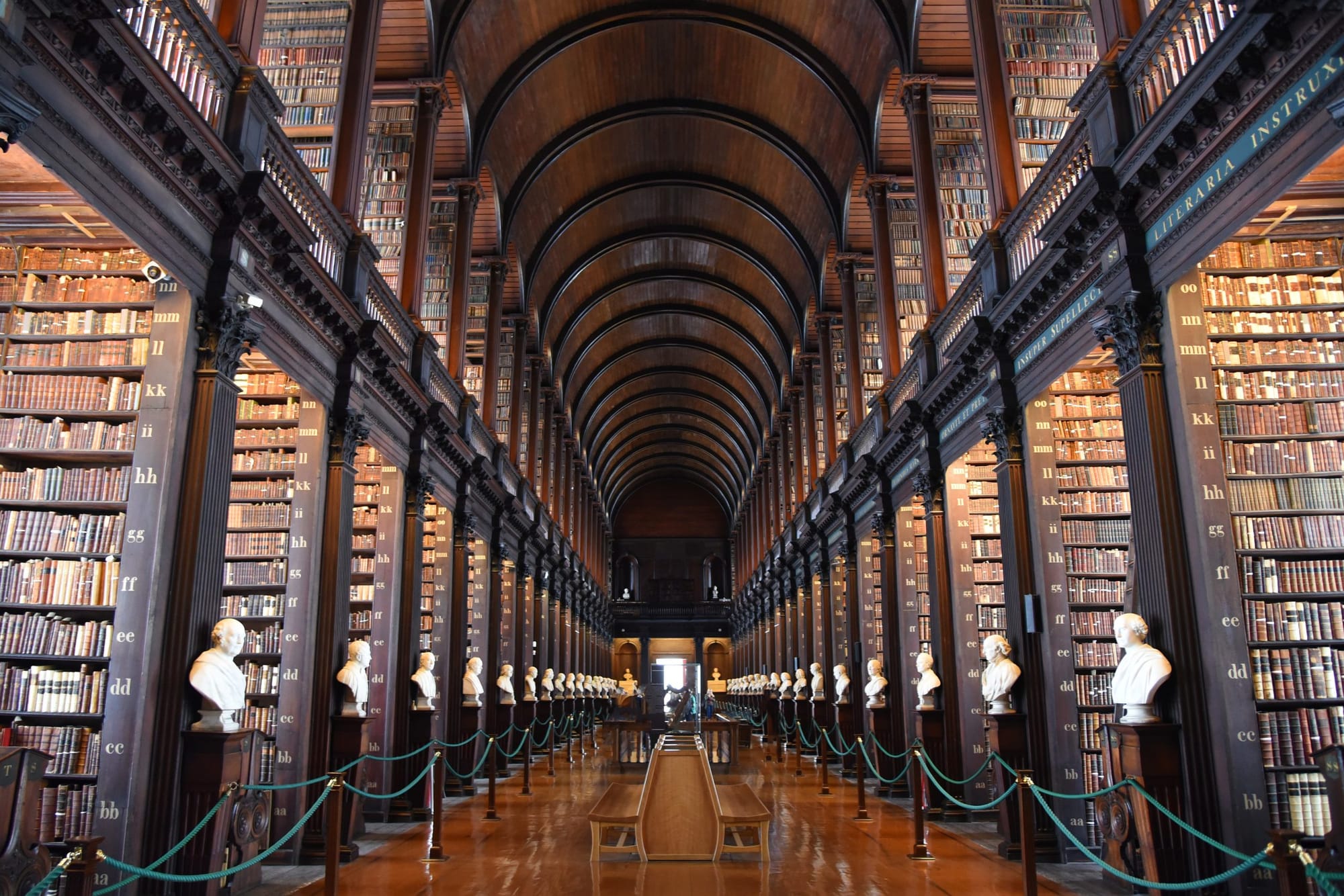
Few library interiors are as instantly recognisable as the Long Room at Trinity College Dublin. Stretching approximately sixty-five metres in length beneath an elegant barrel-vaulted wooden ceiling, the Long Room contains more than 200,000 of the library's oldest volumes. Marble busts of philosophers, scientists, and literary figures line both sides of the hall, creating an atmosphere that feels almost sacred.
Perhaps its most famous possession is the Book of Kells, an exquisitely illuminated manuscript created by Celtic monks around the ninth century. Considered one of the greatest masterpieces of medieval art, it attracts visitors from across the world.
Walking through the Long Room feels like travelling back several centuries, surrounded by towering bookshelves whose contents represent generations of scholarship and discovery.
The Austrian National Library – Vienna, Austria
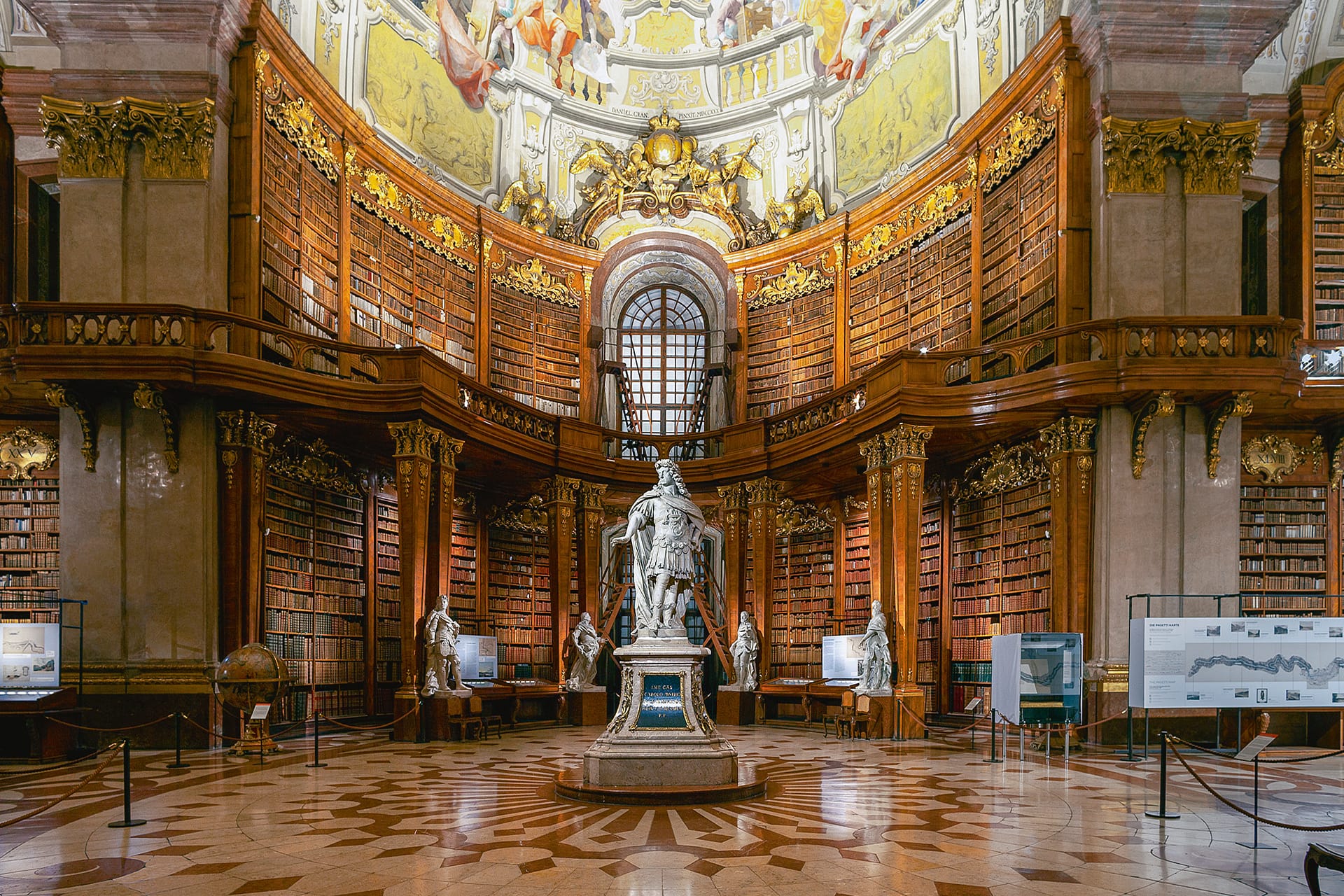
The State Hall of the Austrian National Library ranks among the finest examples of Baroque architecture ever created.
Completed during the eighteenth century under Emperor Charles VI, the immense hall stretches beneath an enormous painted dome adorned with magnificent frescoes celebrating wisdom, learning, and imperial power.
More than 200,000 historic volumes occupy richly decorated walnut bookshelves framed by towering marble columns and intricate golden ornamentation. The combination of architecture, sculpture, painting, and literature creates one of the most visually breathtaking library interiors in existence.
The State Hall demonstrates how earlier generations viewed books not merely as practical objects but as treasures worthy of magnificent surroundings.
Bibliothèque Nationale de France – Paris, France
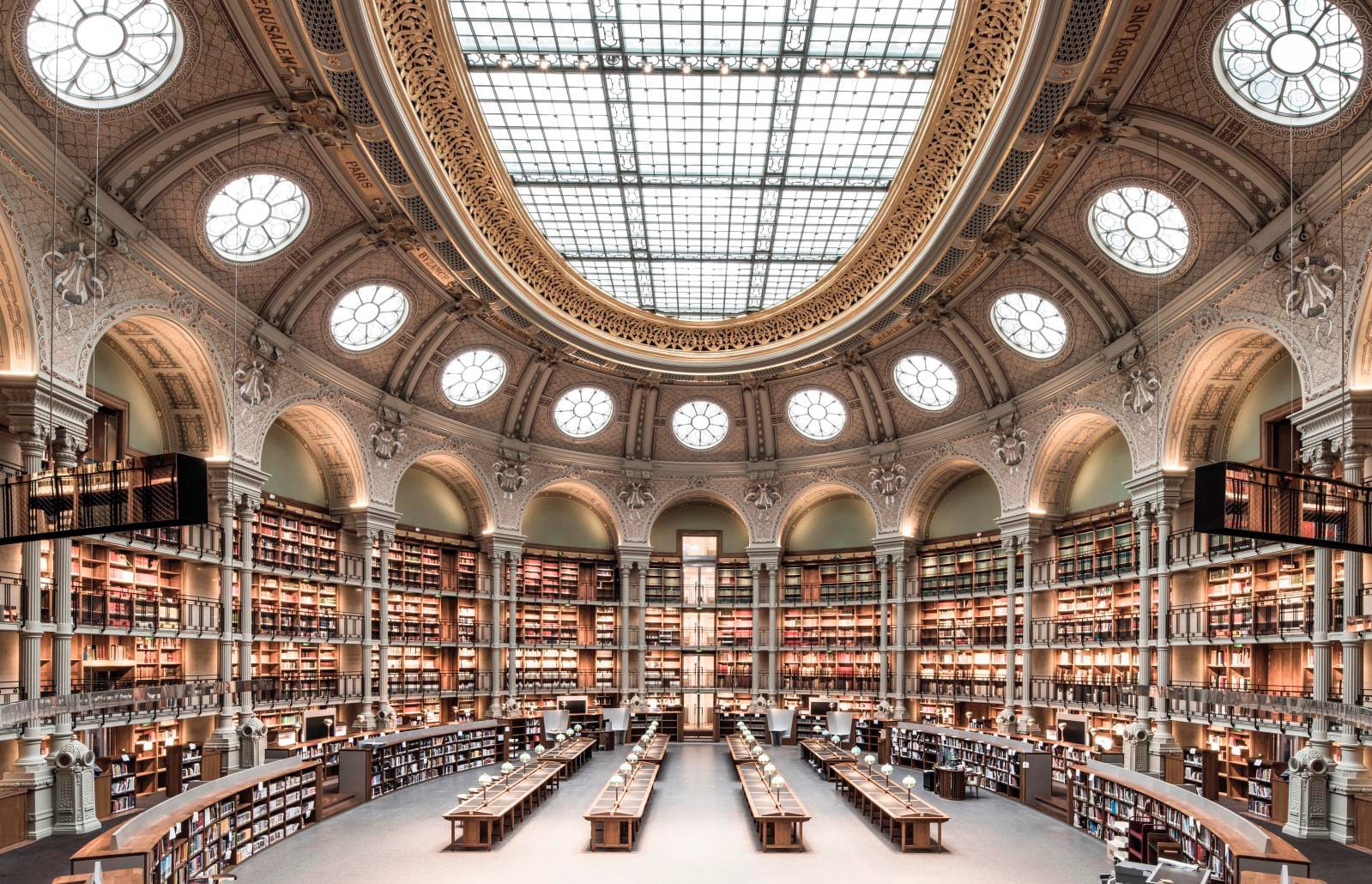
France's national library traces its origins to the royal collections of the Middle Ages and has grown into one of Europe's most important research institutions.
Its collections include millions of books, manuscripts, maps, coins, photographs, prints, and historical documents that chronicle centuries of French and world history.
The modern François-Mitterrand site features four towering glass buildings arranged to resemble open books when viewed from above. This contemporary architectural design symbolises knowledge opening itself to the world while housing one of the largest literary collections ever assembled.
The library continues to balance historical preservation with digital innovation, making vast portions of its collections accessible to researchers worldwide.
The Bodleian Library – Oxford, England
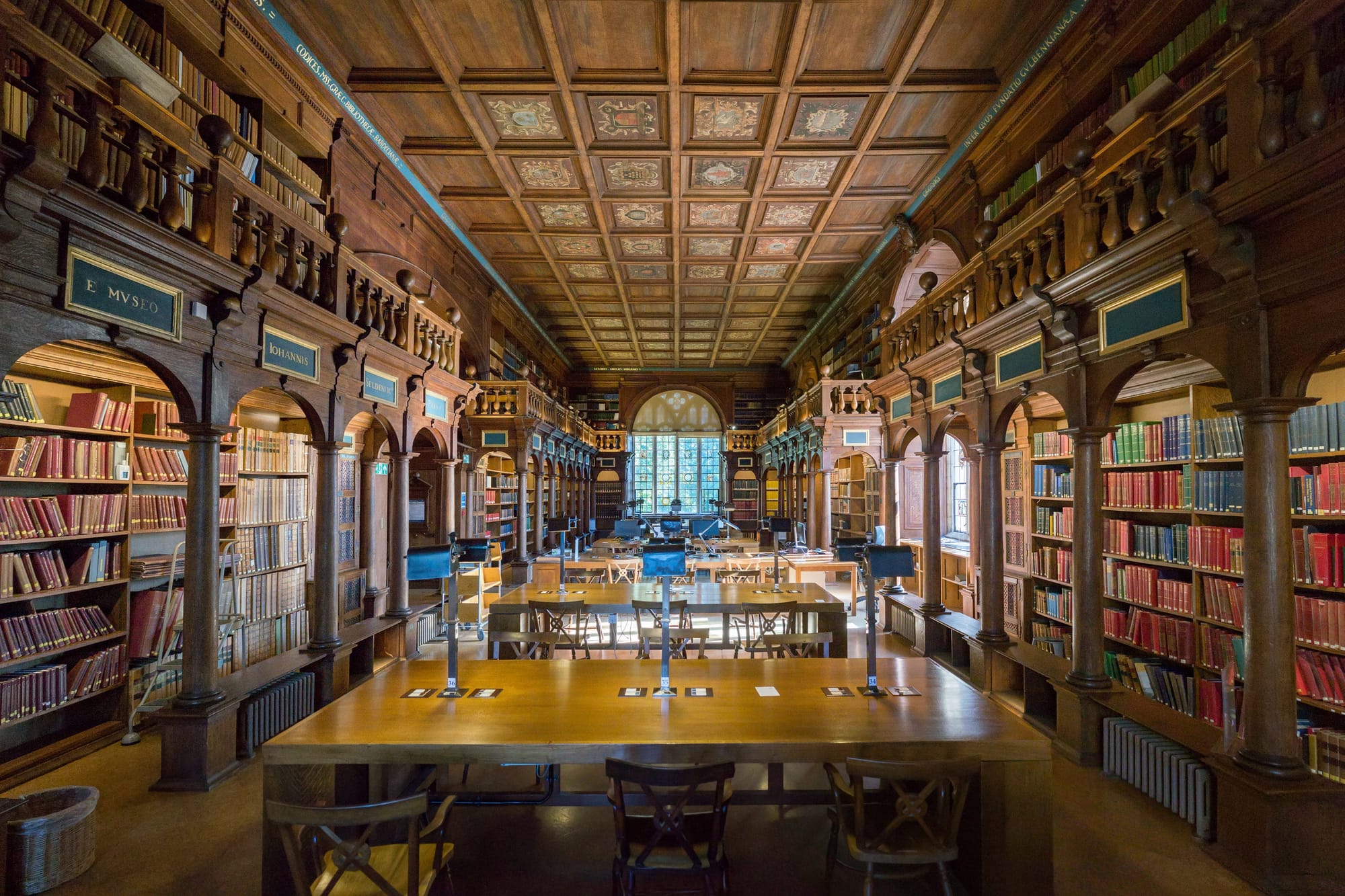
For more than four hundred years, the Bodleian Library has stood at the intellectual heart of the University of Oxford.
Its medieval reading rooms, stone courtyards, and Gothic architecture have inspired generations of scholars, many of whom would later shape science, politics, philosophy, and literature.
Unlike many libraries where books could historically be borrowed, the Bodleian traditionally required many of its precious volumes to remain permanently within its walls. This practice helped preserve countless rare works that continue to be studied today.
The library's historic Duke Humfrey's Library, with its carved wooden ceiling and centuries-old reading desks, offers visitors a glimpse into the scholarly world of Renaissance England.
Admont Abbey Library – Admont, Austria
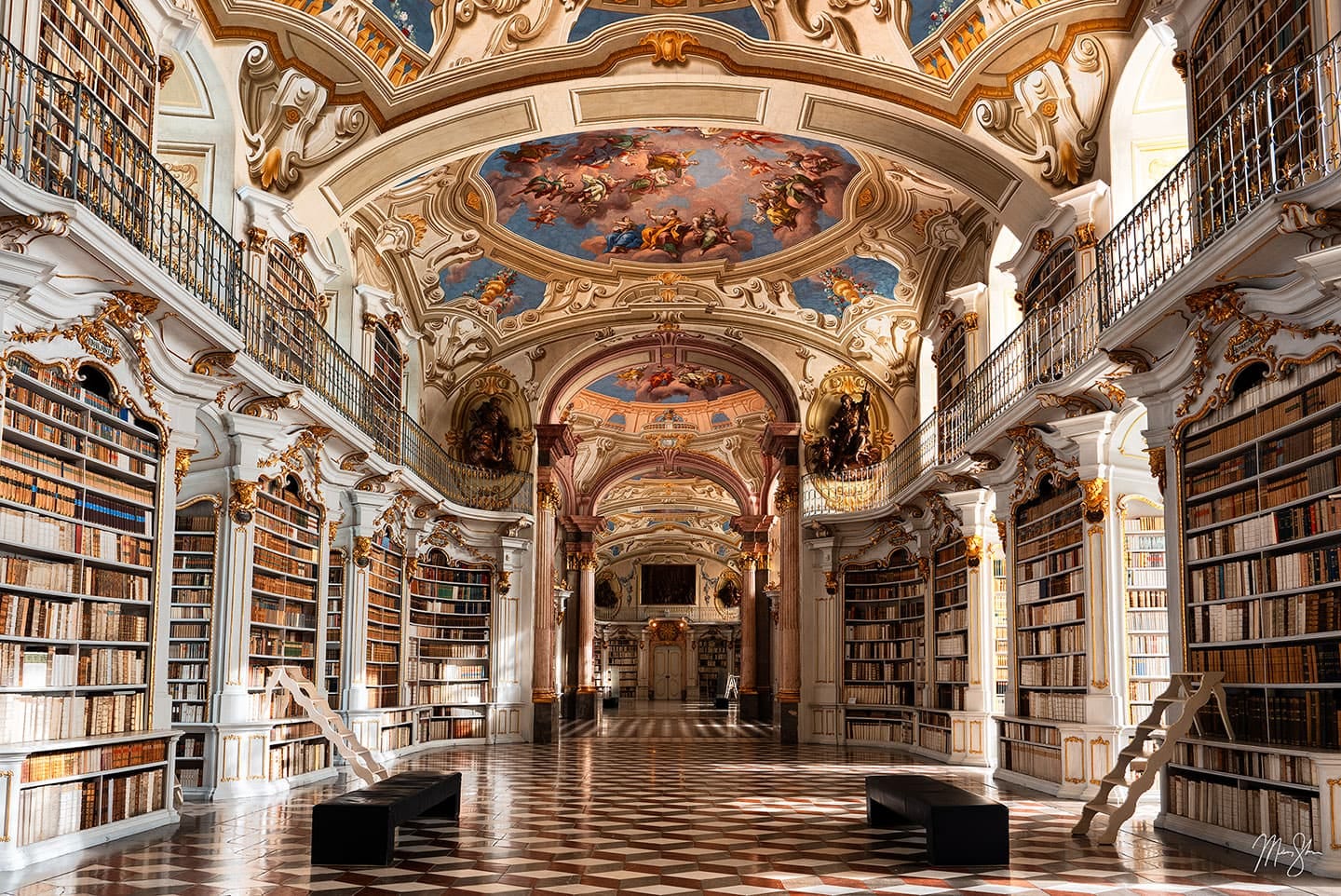
Nestled within the Austrian Alps lies what many consider the most beautiful monastery library in the world.
Completed in 1776, the Admont Abbey Library stretches nearly seventy metres beneath dazzling white ceilings decorated with colourful frescoes symbolising the stages of human knowledge.
Golden sculptures, ornate carvings, elegant columns, and brilliant natural light combine to create an atmosphere that feels almost heavenly. Rather than overwhelming visitors with darkness or heavy decoration, the library radiates brightness, reflecting the Enlightenment ideals that inspired its design.
Its collection contains approximately 70,000 volumes, including numerous rare medieval manuscripts that have survived for centuries within the monastery.
The Strahov Library – Prague, Czech Republic
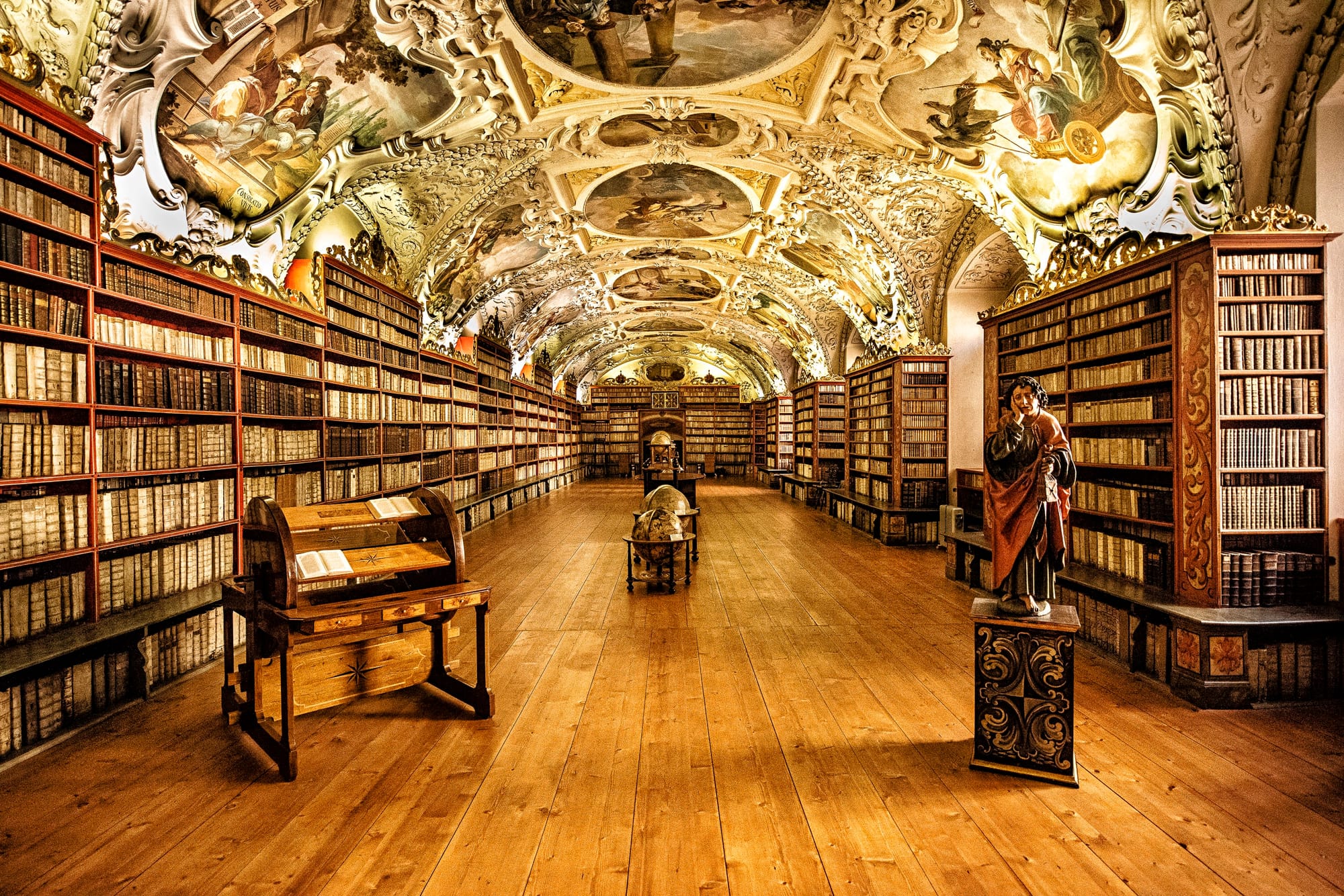
The Strahov Monastery houses two of Europe's most magnificent historic library halls. The Theological Hall, completed in the seventeenth century, features beautifully carved walnut shelving filled with theological works, while the later Philosophical Hall rises dramatically beneath richly painted ceilings depicting the progress of human knowledge.
Globes, astronomical instruments, historical maps, and scientific collections accompany thousands of rare books, illustrating how libraries once functioned as comprehensive centres of learning rather than simply repositories for printed texts. Every detail reflects centuries of scholarship pursued within the monastery's walls.
The Royal Portuguese Cabinet of Reading – Rio de Janeiro, Brazil
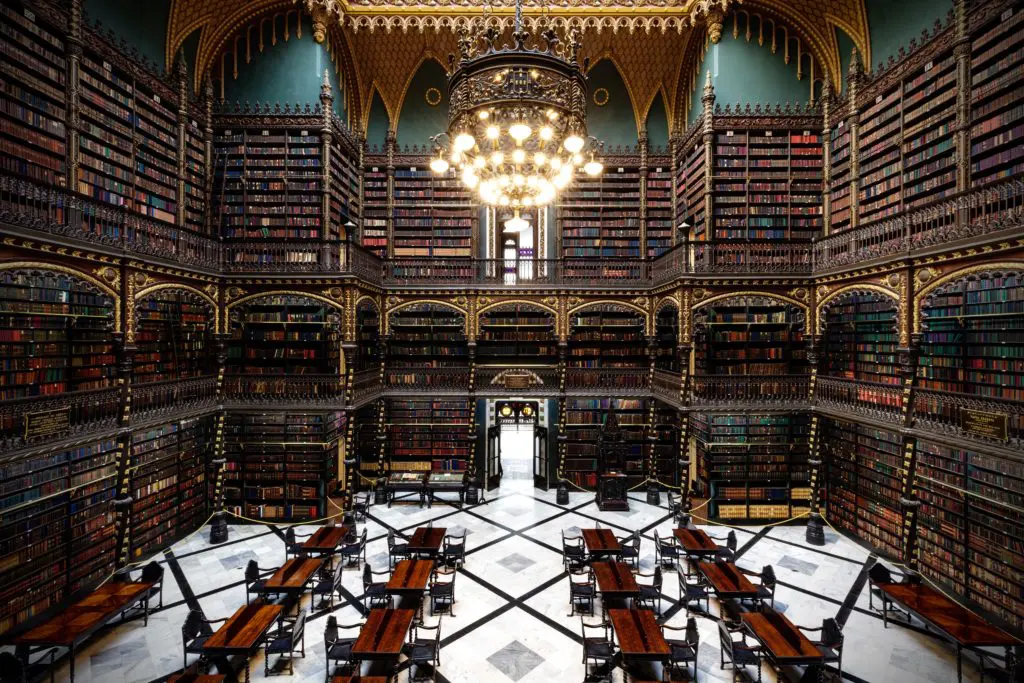
Hidden in the heart of Rio de Janeiro stands one of the world's most extraordinary libraries.
Completed in the nineteenth century, the Royal Portuguese Cabinet of Reading combines Gothic Revival architecture with richly carved wooden galleries that rise several storeys toward an enormous stained-glass skylight.
Housing hundreds of thousands of Portuguese-language works, the library preserves an invaluable literary connection between Portugal and Brazil.
Visitors frequently describe entering the reading room as stepping into the pages of a fantasy novel, surrounded by towering bookshelves illuminated by warm natural light filtering through the colourful ceiling above.
The Vatican Apostolic Library – Vatican City
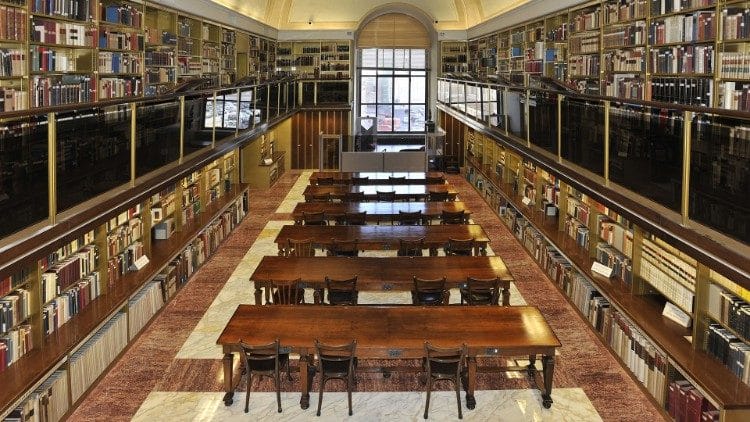
Few libraries possess greater historical significance than the Vatican Apostolic Library. Founded during the fifteenth century, it safeguards some of the world's most important religious, philosophical, scientific, and historical manuscripts. Among its collections are ancient Greek and Latin texts, illuminated medieval manuscripts, Renaissance documents, and priceless maps dating back hundreds of years.
Access remains highly restricted, serving primarily qualified researchers whose work requires consultation of these irreplaceable materials. This exclusivity reflects the extraordinary value of the collections rather than any lack of public interest. Although few people will ever study within its reading rooms, the Vatican Library continues to play an essential role in preserving humanity's documentary heritage.
More Than Buildings Filled with Books
What unites these remarkable libraries is not simply the size of their collections or the beauty of their architecture. They represent a shared belief that knowledge deserves preservation, protection, and celebration.
Throughout history, civilizations have invested enormous resources into building libraries because they understood that ideas possess extraordinary power. Empires have risen and fallen, political systems have changed, and technologies have evolved, yet libraries have remained among the most enduring institutions created by humanity.
Today, digital technology allows millions of books to be accessed instantly from anywhere in the world, leading some to question whether physical libraries remain necessary. Yet visiting one of these extraordinary institutions quickly demonstrates that libraries are about far more than information storage. They are places where history becomes tangible, where architecture inspires contemplation, and where readers become part of an intellectual tradition stretching back thousands of years.
Final Thoughts
The world's greatest libraries stand as monuments to human curiosity. They preserve the discoveries of the past while inspiring the innovations of the future, reminding us that every generation builds upon the knowledge accumulated by those who came before.
Whether admired for their vast collections, their magnificent architecture, or the priceless treasures they protect, these libraries continue to fulfil one of civilization's most important responsibilities: safeguarding humanity's collective memory. Every shelf tells a story, every manuscript represents a voice from another time, and every visitor becomes part of an ongoing conversation that spans cultures, continents, and centuries. In an age of rapidly changing technology, these extraordinary libraries remain timeless reminders that knowledge is one of our greatest and most enduring achievements.
Member discussion