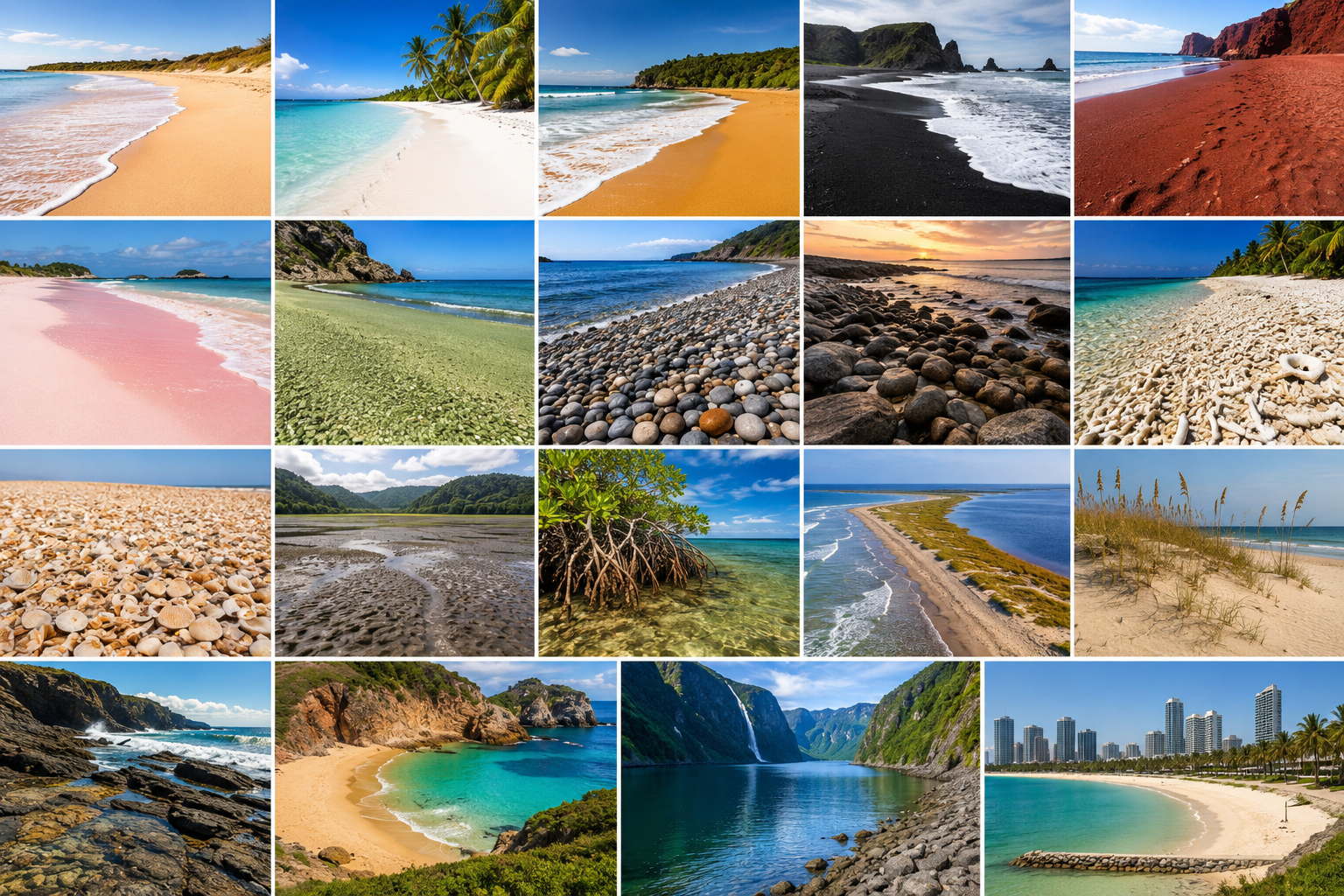

Beaches are among the most diverse natural environments on Earth. While many people imagine a beach as a stretch of golden sand lined with palm trees, coastlines come in an astonishing variety of forms. Their appearance is shaped by geology, climate, ocean currents, tides, volcanic activity, and even living organisms such as corals and shellfish. From black volcanic shores to pink coral beaches, each type tells a unique story about the forces that created it.
Sandy Beaches
Sandy beaches are the most familiar and widespread type of beach. They are formed when waves gradually break down rocks into fine grains that are carried by rivers and ocean currents before being deposited along the coast.
The color of the sand depends on its composition. Quartz produces the classic white or golden appearance, while minerals such as iron can create reddish or brown tones. Sandy beaches are popular for swimming, sunbathing, and water sports because they usually have gentle slopes and soft surfaces.
White Sand Beaches
White sand beaches are celebrated for their brilliant appearance and crystal-clear waters. Their sand is often composed of nearly pure quartz or tiny fragments of coral and shells rich in calcium carbonate.
These beaches are commonly found in tropical regions where coral reefs thrive. Their reflective surface keeps the sand relatively cool even under intense sunlight, making them especially comfortable for visitors.
Golden Beaches
Golden beaches owe their warm color to quartz mixed with minerals like feldspar and iron oxides. They are among the most common coastal landscapes across temperate and tropical regions.
These beaches often feature wide stretches of sand, rolling dunes, and diverse wildlife, making them attractive destinations for tourism and recreation.
Black Sand Beaches
Black sand beaches are created by volcanic activity. When lava flows into the ocean or volcanic rocks erode over time, they produce dark grains of basalt and volcanic glass.
These dramatic coastlines are found in volcanic regions such as Iceland, Hawaii, and parts of New Zealand. The dark sand absorbs more heat from the sun, making these beaches noticeably warmer than lighter-colored shores.
Red Sand Beaches
Red sand beaches are relatively rare. Their distinctive color comes from iron-rich volcanic rocks or minerals that gradually weather into fine particles.
The vivid contrast between the red shoreline and blue ocean creates some of the world’s most striking coastal scenery.
Pink Sand Beaches
Pink beaches form when white sand mixes with microscopic fragments of red coral, pink shells, or tiny marine organisms called foraminifera.
The resulting blush-colored shoreline is both beautiful and unusual, with the intensity of the color varying depending on the tide, weather, and amount of biological material present.
Green Sand Beaches
Green sand beaches are among the rarest on Earth. Their color comes from the mineral olivine, a green crystal found in volcanic rocks. As softer volcanic material erodes away, the heavier olivine grains accumulate along the shoreline.
Only a handful of green sand beaches exist worldwide due to the unique geological conditions required for their formation.
Pebble and Shingle Beaches
Instead of sand, pebble beaches consist of rounded stones that have been smoothed by centuries of wave action. Larger versions are often called shingle beaches.
These beaches are common where strong waves wash away finer sediments, leaving behind heavier rocks. Walking barefoot can be challenging, but the constant movement of pebbles creates a distinctive, soothing sound as waves roll in and out.
Cobble and Boulder Beaches
Some coastlines are covered with large rounded rocks ranging from fist-sized cobbles to massive boulders. These beaches are typically found in areas with powerful wave energy or where glaciers have deposited large stones.
Although less suitable for traditional beach activities, they provide important habitats for marine life and seabirds.
Coral Beaches
Coral beaches are composed primarily of broken coral skeletons, shells, and other calcium-rich marine materials. They are closely associated with tropical coral reef ecosystems.
Their bright appearance and clear waters often support exceptional biodiversity, making them popular destinations for snorkeling and diving.
Shell Beaches
Shell beaches are formed from the accumulation of countless seashells rather than sand. Over thousands of years, waves deposit shells faster than they break down, creating beaches composed almost entirely of shell fragments.
These rare coastlines provide valuable insights into marine ecosystems and the abundance of shell-producing organisms.
Mud Beaches
Mud beaches develop in sheltered coastal environments where waves are too gentle to remove fine sediments. Rivers deposit clay and silt, creating broad mudflats that are exposed during low tide.
Although they may appear less scenic than sandy beaches, mud beaches are among the most biologically productive ecosystems on Earth, supporting migratory birds, fish, crabs, and countless invertebrates.
Mangrove Beaches
In tropical regions, mangrove forests often replace traditional sandy shorelines. Their intricate root systems trap sediments, reduce coastal erosion, and provide nursery habitats for many fish species.
Mangrove beaches serve as natural barriers against storms while supporting extraordinary biodiversity.
Barrier Beaches
Barrier beaches are long, narrow strips of sand separated from the mainland by lagoons or marshes. They constantly shift under the influence of waves, tides, and storms.
These dynamic coastal features protect inland areas from storm surges while providing habitats for birds, turtles, and coastal vegetation.
Dune Beaches
Many sandy beaches are backed by dunes formed when wind carries dry sand inland. Over time, grasses and other plants stabilize the dunes, creating important coastal ecosystems.
Dunes act as natural defenses against erosion and flooding while supporting specialized wildlife adapted to harsh, salty conditions.
Rocky Beaches
Rocky beaches consist of exposed bedrock, cliffs, and tide pools rather than loose sediment. Constant wave action carves dramatic formations into the coastline, creating caves, arches, and platforms.
These environments support diverse marine communities, with organisms adapted to survive changing tides and crashing waves.
Pocket Beaches
Pocket beaches are small, isolated beaches nestled between rocky headlands or cliffs. Their limited size results from surrounding rock formations that trap sand within a protected cove.
These beaches often feature calm waters and spectacular scenery, making them popular with photographers and nature lovers.
Fjord Beaches
Fjord beaches occur along deep, glacially carved valleys that extend inland from the sea. Although often narrow and rocky, they offer breathtaking views of towering cliffs, waterfalls, and tranquil waters.
Their unique landscapes reflect the immense power of ancient glaciers that shaped the coastline.
Artificial Beaches
Not all beaches are natural. Artificial beaches are created by transporting sand to coastal or inland locations for recreation, erosion control, or tourism development.
Engineers carefully select compatible sand to maintain stability and minimize environmental impacts, although ongoing maintenance is often required.
Conclusion
The world’s beaches are far more diverse than many people realize. Each coastline reflects millions of years of geological processes, the movement of water and wind, and the influence of living organisms. Whether composed of brilliant white coral, black volcanic basalt, smooth pebbles, shells, mud, or towering rocks, every beach offers a unique window into Earth’s dynamic natural systems. Understanding these different types of beaches not only deepens our appreciation of their beauty but also highlights the importance of protecting these remarkable coastal environments for future generations.
Subscribe for free and receive a six-part email course that walks you through the process of turning your expertise into a product, helping you move beyond selling your time for money.
Member discussion