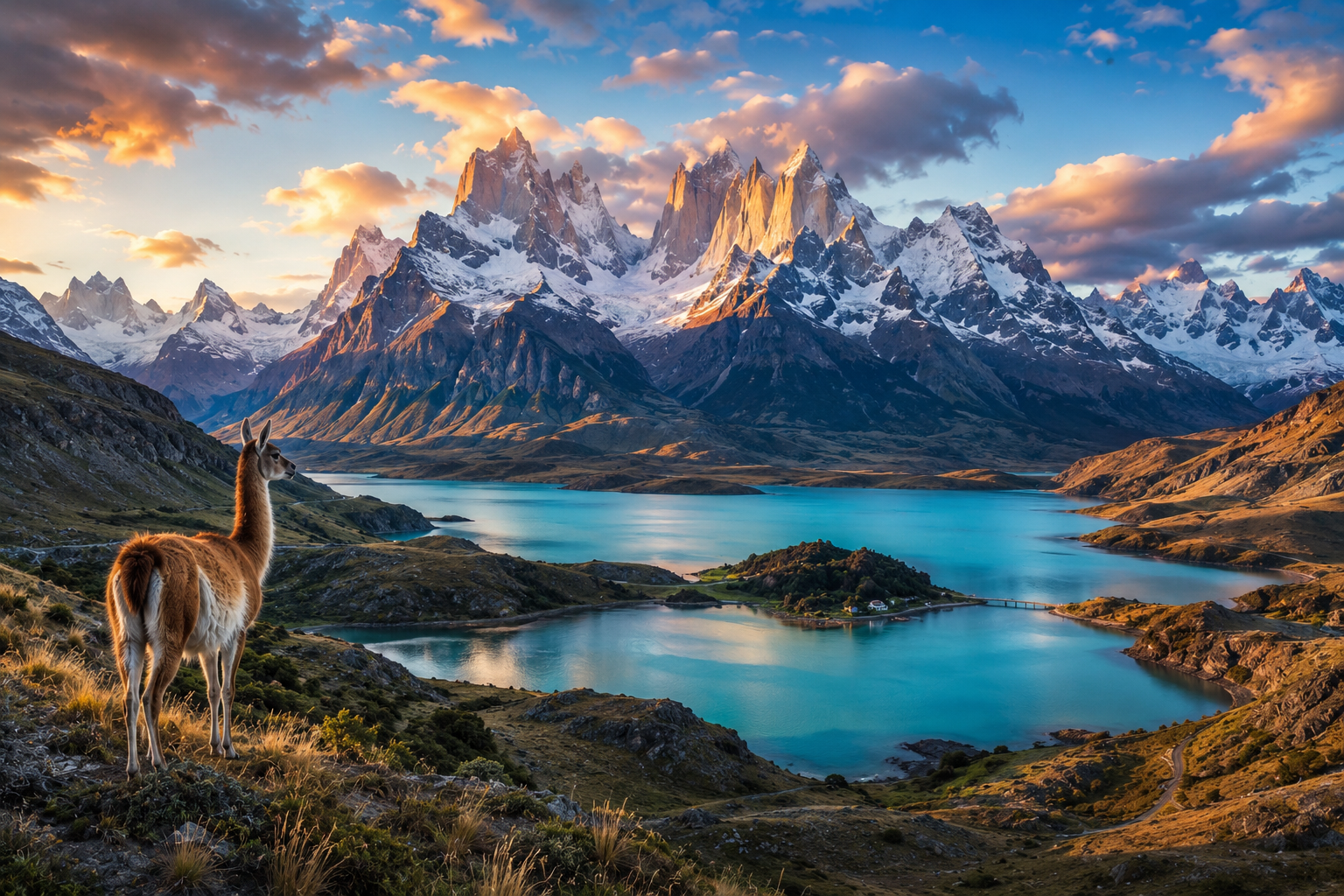

Few places on Earth capture the imagination quite like Patagonia. Stretching across the southern reaches of Argentina and Chile, this vast and untamed region is a land of towering mountains, ancient glaciers, windswept plains, crystal-clear lakes, and extraordinary wildlife. Often described as the “end of the world,” Patagonia offers some of the most dramatic and pristine landscapes on the planet, attracting adventurers, photographers, and nature lovers from every corner of the globe.
Unlike many famous destinations shaped by large cities and bustling tourism, Patagonia remains remarkably wild. Here, nature dominates the landscape, reminding visitors of just how powerful and beautiful our planet can be.
Where Is Patagonia?
Patagonia occupies the southern tip of South America, spanning approximately one million square kilometers across both Argentina and Chile. Although there is no universally agreed political boundary, the region generally begins south of the Colorado River in Argentina and extends all the way to Tierra del Fuego, the archipelago that marks the southernmost reaches of the continent.
To the west, the towering Andes Mountains separate Chile from Argentina, while the east opens into vast steppes that gradually meet the Atlantic Ocean. The Pacific coastline on Chile’s side is carved into countless fjords, islands, and channels created by glaciers over thousands of years.
Its remote location contributes greatly to Patagonia’s appeal. Many areas remain sparsely populated, allowing visitors to experience landscapes that have changed little for centuries.
A Land Shaped by Ice and Wind
The landscape of Patagonia is the result of millions of years of geological activity and repeated ice ages. Massive glaciers carved deep valleys, rugged mountain peaks, and spectacular fjords that continue to define the region today.
One of Patagonia’s most famous natural features is the Southern Patagonian Ice Field, the world’s second-largest non-polar ice mass after Antarctica and Greenland. This enormous reservoir feeds dozens of glaciers that slowly flow through mountain valleys toward lakes and oceans.
Perhaps the most famous is the Perito Moreno Glacier, one of the few glaciers in the world that continues to maintain or even slightly advance its size. Towering walls of brilliant blue ice regularly crack and collapse into Lake Argentino with thunderous force, creating one of nature’s most unforgettable spectacles.
Majestic Mountains and National Parks
Patagonia is home to some of the world’s most iconic mountain scenery.
In Argentina, Mount Fitz Roy rises dramatically above the landscape with its sharp granite peaks that glow orange during sunrise and sunset. The mountain has become one of the most recognizable symbols of Patagonia and is considered one of the world’s premier hiking destinations.
Across the border in Chile lies Torres del Paine National Park, famous for its three towering granite spires, turquoise lakes, glaciers, waterfalls, and abundant wildlife. The park consistently ranks among the most beautiful national parks on Earth and attracts hikers from around the world who come to complete its renowned multi-day trekking routes.
Throughout Patagonia, countless trails lead visitors through forests, valleys, mountain passes, and glacial viewpoints, offering unforgettable experiences regardless of hiking ability.
Wildlife in One of Earth’s Last Great Wildernesses
Despite its harsh climate, Patagonia supports an impressive variety of wildlife.
The open grasslands provide habitat for guanacos, relatives of the llama, which roam in large herds across the steppe. Their primary predator is the elusive puma, one of the region’s most iconic yet rarely seen animals.
Birdlife is equally spectacular. Massive Andean condors soar effortlessly above mountain ridges with wingspans reaching over three meters, while flamingos gather in shallow lakes and wetlands.
Along Patagonia’s coastlines, visitors may encounter Magellanic penguins, elephant seals, sea lions, dolphins, and southern right whales. Orcas are occasionally seen hunting along the shoreline, demonstrating remarkable intelligence and hunting strategies.
The diversity of habitats—from glaciers and forests to grasslands and marine ecosystems—makes Patagonia one of South America’s richest regions for wildlife observation.
The Famous Patagonian Wind
One characteristic every visitor quickly notices is the wind.
Patagonia is among the windiest inhabited regions on Earth. Strong westerly winds travel almost uninterrupted across the Southern Ocean before crashing into the Andes Mountains, creating powerful gusts that can exceed 100 kilometers per hour.
These persistent winds have shaped both the landscape and the vegetation. Trees often grow permanently bent in one direction, while hikers quickly learn the importance of sturdy clothing and careful footing.
Although challenging, the wind has become an inseparable part of Patagonia’s identity, adding to its sense of raw wilderness.
Life at the Edge of the World
Human settlement in Patagonia has always been sparse.
For thousands of years, Indigenous peoples such as the Tehuelche, Selk’nam, and Yaghan adapted remarkably to the demanding environment, developing unique cultures closely connected to the land and sea.
European explorers arrived during the sixteenth century, with Ferdinand Magellan sailing through the region in 1520. According to historical accounts, he named the area “Patagonia” after encountering Indigenous people whom his crew believed had unusually large feet, although historians continue to debate the true origin of the name.
Today, small towns such as El Calafate, El Chaltén, Puerto Natales, and Ushuaia serve as gateways to Patagonia’s spectacular wilderness while maintaining a relaxed pace of life that contrasts sharply with major cities elsewhere.
A Climate of Constant Change
Patagonia’s climate is remarkably varied.
The western side receives abundant rainfall as moist Pacific air rises over the Andes, creating lush temperate rainforests filled with ancient trees, mosses, and ferns.
East of the mountains, however, the landscape changes dramatically. The Andes block much of the moisture, producing a dry rain-shadow region dominated by grasslands, shrubs, and open plains.
Visitors can experience sunshine, rain, snow, and powerful winds all within a single day. This unpredictability has become part of the adventure, rewarding those who come prepared for rapidly changing conditions.
Adventure Around Every Corner
Patagonia is considered one of the world’s greatest destinations for outdoor enthusiasts.
Hiking is undoubtedly its most famous activity, but opportunities extend far beyond walking trails. Visitors can kayak among glaciers, ride horses across open plains, climb granite peaks, mountain bike through forests, observe whales along the coast, and cruise through spectacular fjords.
In winter, skiing and snowboarding become popular in the southern Andes, while year-round photography opportunities draw professionals and hobbyists alike.
For many travelers, the greatest adventure is simply standing quietly before a glacier, mountain, or lake and appreciating the extraordinary scale of the surrounding landscape.
Protecting Patagonia’s Natural Beauty
Much of Patagonia remains protected through an extensive network of national parks and nature reserves.
Conservation efforts have become increasingly important as tourism grows and climate change affects glaciers, ecosystems, and wildlife habitats. Many glaciers have been retreating over recent decades, serving as visible reminders of our changing climate.
Fortunately, governments, conservation organizations, and local communities continue working together to preserve Patagonia’s unique environments while promoting sustainable tourism that allows future generations to experience its extraordinary beauty.
A Place That Stays With You
Patagonia is not simply a destination—it is an experience that reshapes one’s understanding of nature. Here, towering mountains rise above ancient glaciers, vast plains stretch endlessly toward the horizon, and powerful winds remind visitors that humanity occupies only a small place within Earth’s immense landscapes.
Its beauty lies not in grand cities or famous monuments, but in untouched wilderness, silence, and the overwhelming sense of freedom that comes from standing in one of the last truly wild places on the planet.
For those fortunate enough to visit, Patagonia leaves an enduring impression. It is a place where nature still writes the rules, where adventure begins with every step, and where the edge of the world feels wonderfully alive.
Member discussion