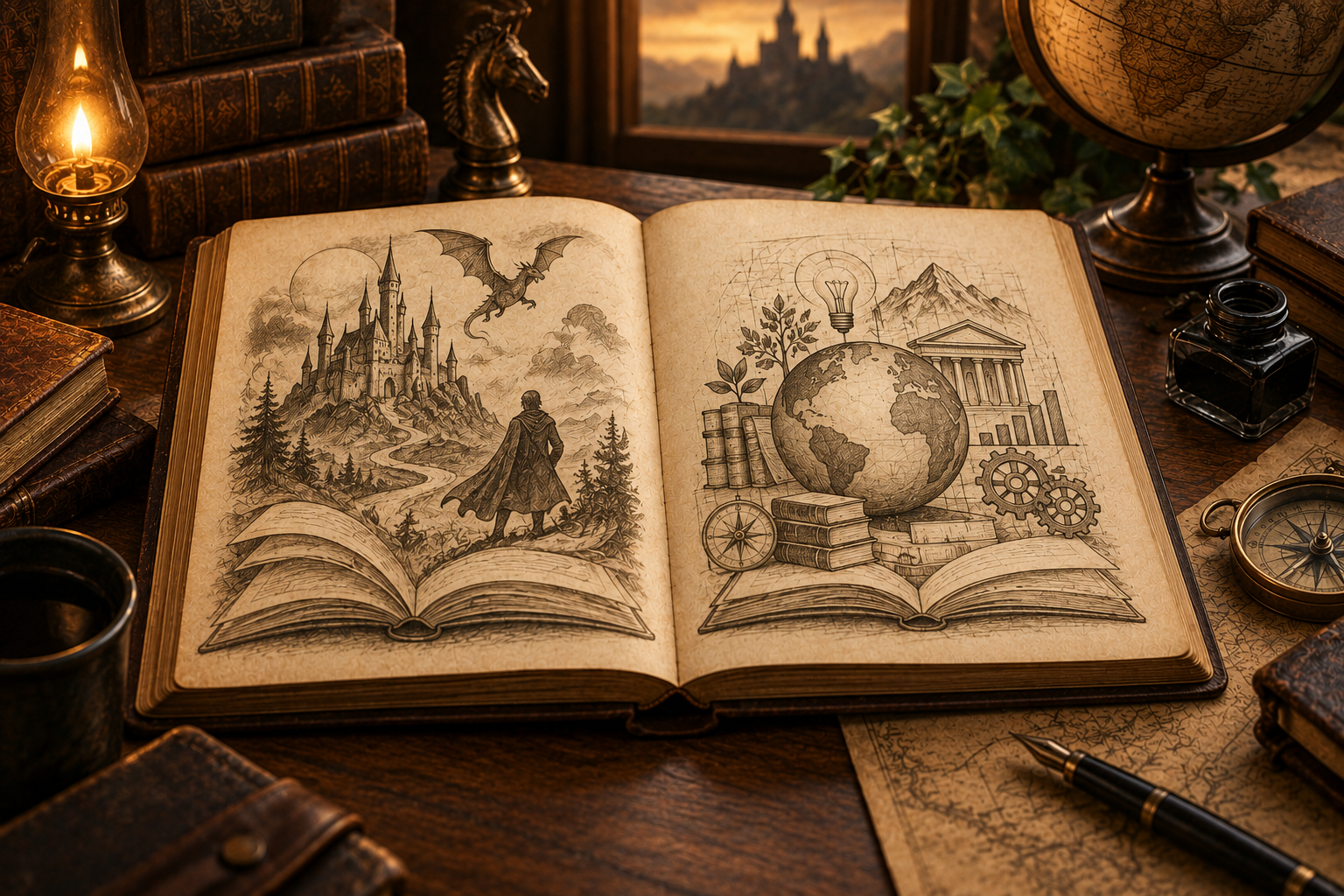

One of the first decisions every aspiring author must make is whether to write fiction or nonfiction. While both involve storytelling, creativity, and careful writing, they serve very different purposes and appeal to different audiences. Understanding these differences will help you choose the type of book that best matches your goals, interests, and strengths. There is no universally better option. Fiction offers the freedom to create entirely new worlds and characters, while nonfiction allows you to share knowledge, experiences, and practical insights. The right choice depends on what you want to communicate and the impact you hope your book will have.
What Is Fiction?
Fiction is writing that tells an imagined story. Although it may be inspired by real events, people, or places, the characters, dialogue, and plot are created by the author. Novels, short stories, fantasy, science fiction, romance, mystery, and historical fiction all belong to this category. Fiction gives authors complete creative freedom to invent settings, build compelling characters, and explore ideas through narrative rather than direct instruction. Readers turn to fiction not only for entertainment but also for emotional experiences. Great stories help readers understand human nature, explore difficult questions, and experience lives they could never live themselves.
What Is Nonfiction?
Nonfiction is based on real people, real events, real experiences, or factual information. Its purpose is usually to educate, explain, persuade, document, or inspire. Business books, biographies, memoirs, self-help books, history, science, travel writing, cookbooks, and textbooks are all forms of nonfiction. Rather than inventing stories, nonfiction authors organize knowledge into a format that helps readers better understand a topic or solve a problem. Although nonfiction relies on facts, it still benefits from engaging storytelling. Personal anecdotes, case studies, and real-life examples often make complex ideas easier to understand and remember.
Different Purposes
Perhaps the biggest difference between fiction and nonfiction lies in their purpose. Fiction primarily aims to entertain, move, or emotionally engage the reader. While it often explores important themes and ideas, these lessons emerge naturally through the story rather than being explicitly taught. Nonfiction is generally more direct. Its goal is to inform, educate, inspire, or help readers achieve a specific outcome. Readers often choose nonfiction because they want to learn something new, improve a skill, or gain a different perspective. Understanding your purpose makes choosing between the two much easier.
The Writing Process
The creative process also differs significantly between fiction and nonfiction. Fiction authors spend considerable time developing characters, designing fictional worlds, planning plots, and creating believable dialogue. Success depends heavily on imagination, pacing, emotional tension, and storytelling. Nonfiction authors typically invest more time researching, organizing information, verifying facts, and explaining ideas clearly. While creativity remains important, accuracy and clarity usually take priority over dramatic storytelling. Both types of writing require careful planning, editing, and revision, but the challenges are different.
Research Requirements
Many people assume that only nonfiction requires research. In reality, both genres depend on thorough preparation. Nonfiction authors research facts, statistics, historical events, expert opinions, and supporting evidence to ensure accuracy and credibility. Fiction authors often research historical periods, professions, cultures, locations, technology, psychology, and even scientific principles to create believable worlds. Readers quickly notice when details feel unrealistic or inconsistent. Good research strengthens every type of book.
Audience Expectations
Readers approach fiction and nonfiction with different expectations. Fiction readers expect compelling characters, engaging plots, emotional depth, and satisfying storytelling. They willingly suspend disbelief as long as the fictional world remains internally consistent. Nonfiction readers expect useful information, logical arguments, practical advice, and trustworthy sources. They want clarity, accuracy, and insights they can apply to their own lives or work. Meeting these expectations is essential for building trust with your audience.
Building Authority
For professionals, entrepreneurs, consultants, coaches, and educators, nonfiction often provides the greatest opportunity to establish authority. A well-written nonfiction book demonstrates expertise while allowing readers to understand your methods, philosophy, and experience. It can become the foundation of your personal brand and create opportunities for speaking, consulting, teaching, and other professional work. Fiction can certainly build an author's reputation, but it generally establishes creative authority rather than subject-matter expertise.
Earning Income
Both fiction and nonfiction can generate income, although the business models often differ. Successful fiction authors frequently build careers through multiple books, series, loyal readers, and recurring sales. Their long-term success often depends on consistently publishing engaging stories that keep readers coming back. Nonfiction authors often earn income through a combination of book sales and opportunities created by the book itself. Courses, coaching, workshops, consulting, speaking engagements, and digital products frequently generate more revenue than royalties alone. Neither path is inherently more profitable. Success depends on your audience, your marketing strategy, and the value you provide.
Can You Write Both?
Many authors successfully write both fiction and nonfiction throughout their careers. Some nonfiction writers use storytelling techniques learned from fiction to make their books more engaging. Likewise, fiction authors often draw upon their professional knowledge, personal experiences, or historical research to create richer and more believable stories. Developing skills in one genre often improves your writing in the other because both require clear communication, thoughtful structure, and a deep understanding of the reader.
How to Choose
If you are unsure which type of book to write, begin by asking yourself a few important questions. Do you feel more excited about teaching or storytelling? Are you driven by imagination or by sharing knowledge? Do you enjoy creating fictional characters or explaining real ideas? Would you rather solve a reader's problem or take them on an emotional journey? There are no right or wrong answers. Your interests, experience, and long-term goals should guide your decision. Many authors discover that the best choice is the one they are genuinely excited to spend months, or even years, developing.
Every Great Book Starts with the Right Choice
Whether you choose fiction or nonfiction, your success ultimately depends on creating something meaningful for your readers. Both genres have the power to educate, entertain, inspire, and change lives in different ways. The most important decision is not choosing the genre that appears most profitable or popular. It is choosing the one that allows you to communicate your ideas with authenticity and enthusiasm. When your writing reflects your strengths and your purpose, you are far more likely to create a book that readers remember long after they have turned the final page.
Member discussion